Desert elephants
In northwestern Namibia, elephants move long distances between water sources, traveling dry riverbeds and adjusting their pace to heat, distance, and seasonal scarcity.

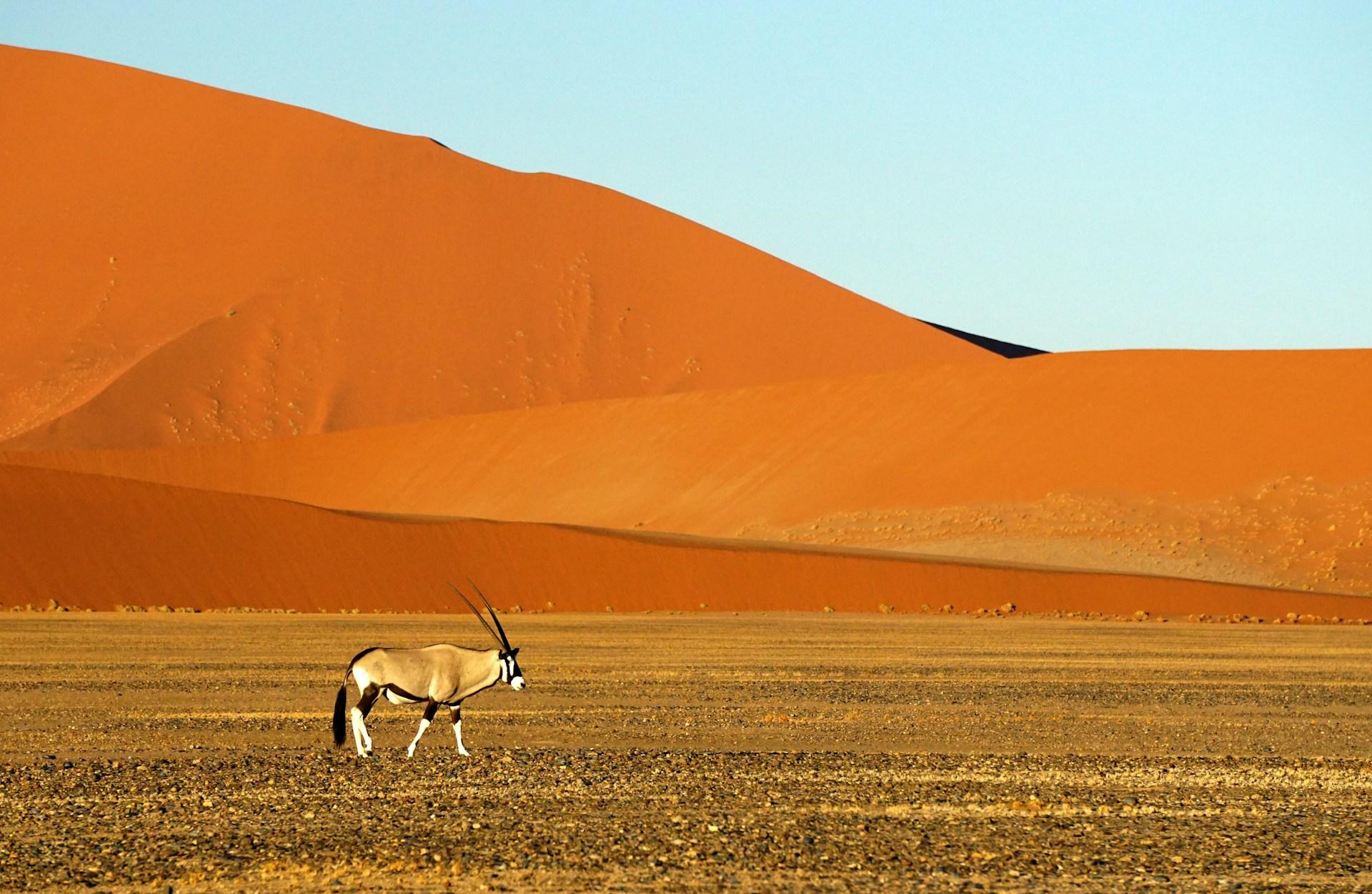
Explore wildlife around Etosha's waterholes, desert-adapted elephants, and vast open spaces where safari feels completely different.
A Namibia safari is less about constant sightings and more about how wildlife survives. The reward is a quieter rhythm, more space around you, and animals that feel inseparable from the harsh landscapes they have adapted to.
Namibia sits inside the broader safari cluster, but it serves a very different traveler than Tanzania or South Africa. This is where safari becomes quieter, wider, and more about survival than spectacle.
Namibia is best for travelers who have either already experienced classic safaris or want something quieter and more unusual from the start.
Wildlife in Namibia is not about density, but about adaptation and space.
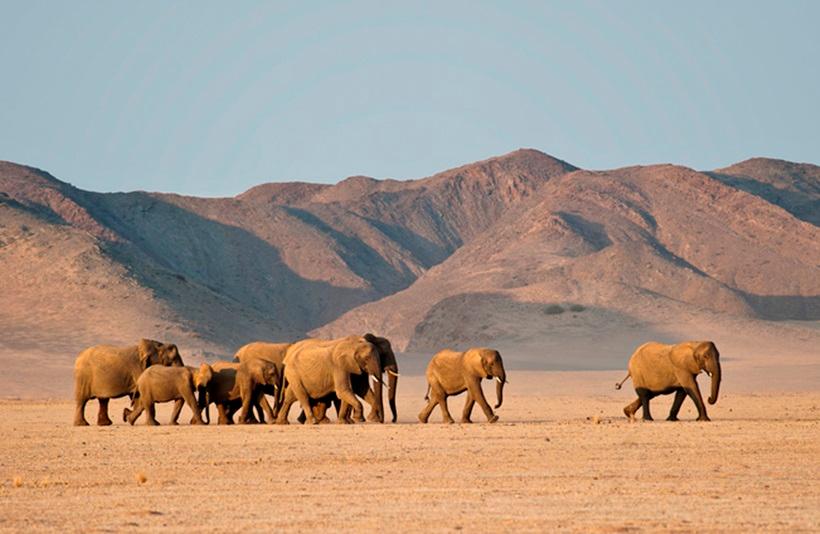
This is the defining difference. Namibia wildlife stands out because the environment changes how animals move, feed, rest, and survive. If you are specifically interested in desert animals in Africa, this is one of the most distinctive safari destinations to study them, especially for understanding desert-adapted elephants in Namibia.
In northwestern Namibia, elephants move long distances between water sources, traveling dry riverbeds and adjusting their pace to heat, distance, and seasonal scarcity.
In the Skeleton Coast ecosystem, lions have adapted their hunting behavior to huge ranges, sparse prey, and one of the most unforgiving environments in Africa.
The oryx is the defining image of Namibia wildlife because it is built for arid survival, with the ability to manage body temperature and live where many grazers struggle.
Namibia's giraffes show how even familiar safari animals behave differently in dry country, browsing tough vegetation and moving through open, water-limited landscapes.
This is one of the few places in Africa where you can see desert-adapted elephants and lions in the wild.
In Namibia, the landscape is not just scenery behind the animals. It is the force shaping them. Water access determines movement, heat changes feeding patterns, and open terrain makes every sighting feel tied to environmental pressure rather than abundance alone, which is what gives a Namibia safari such a distinctive sense of place.
The strongest Namibia itineraries are wildlife-first. Even when a region is visually famous, the real question is what it adds to your understanding of Namibia's animals and how they live.
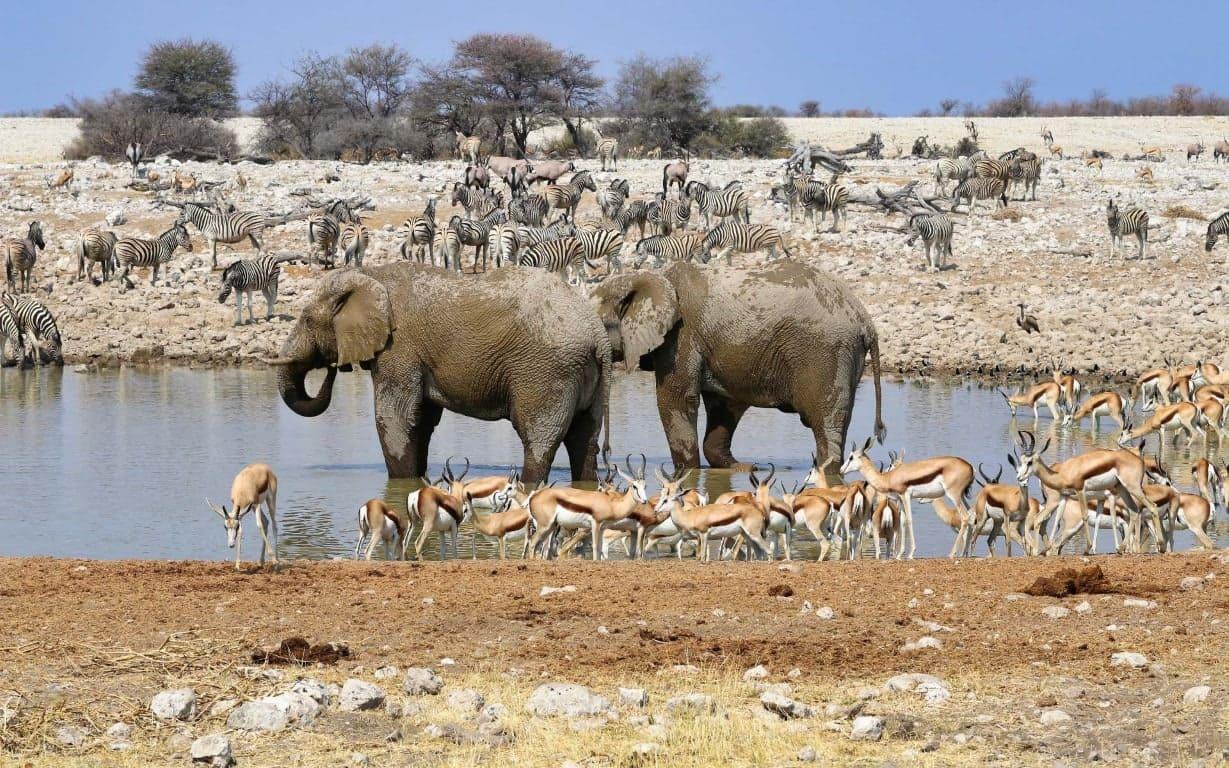
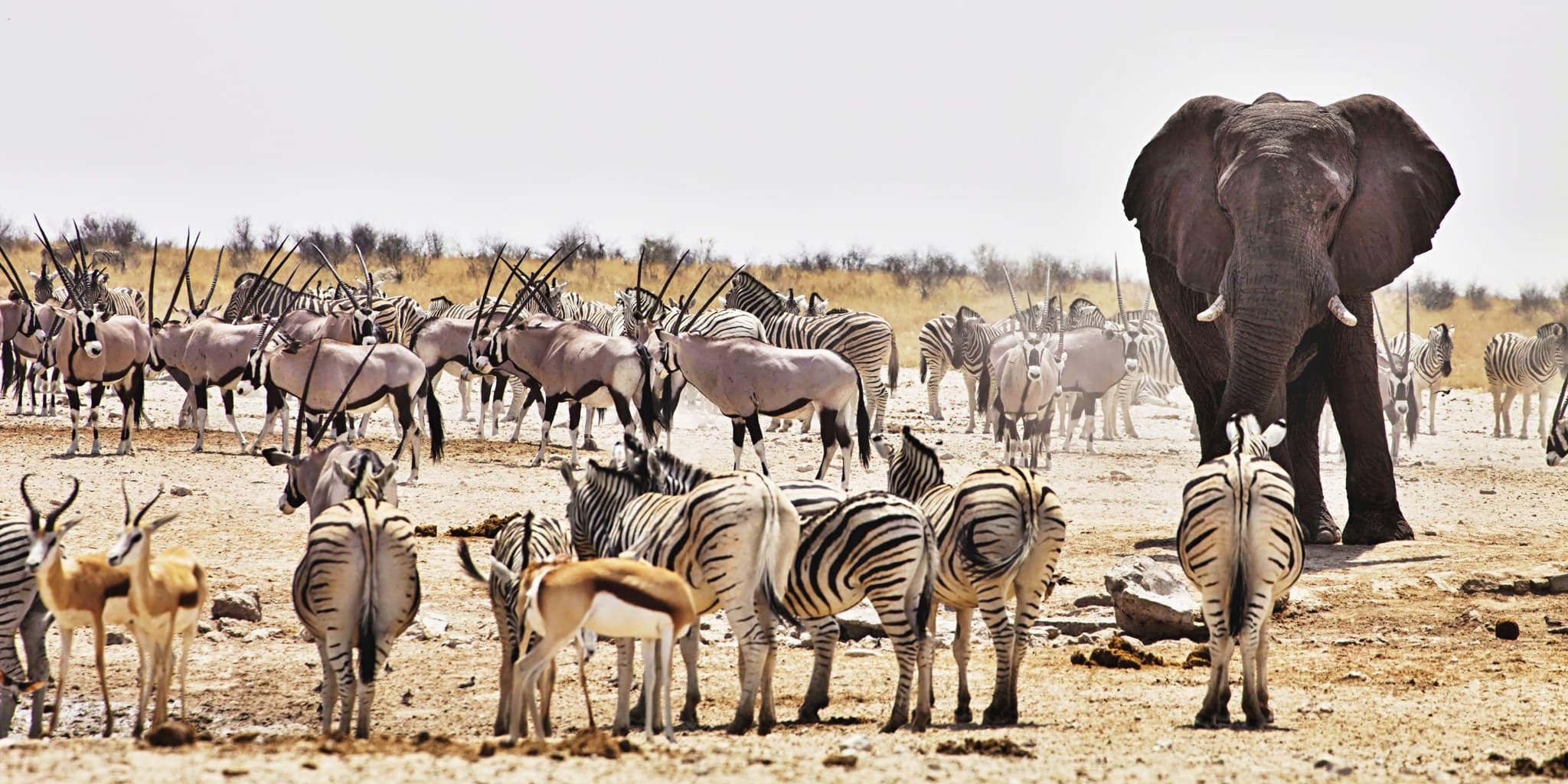
Etosha is the core of most Namibia safari itineraries. Its waterholes concentrate animals in the dry season, making the viewing feel deliberate and watchful rather than rushed. If you want the strongest Etosha safari experience, this is where the trip begins.
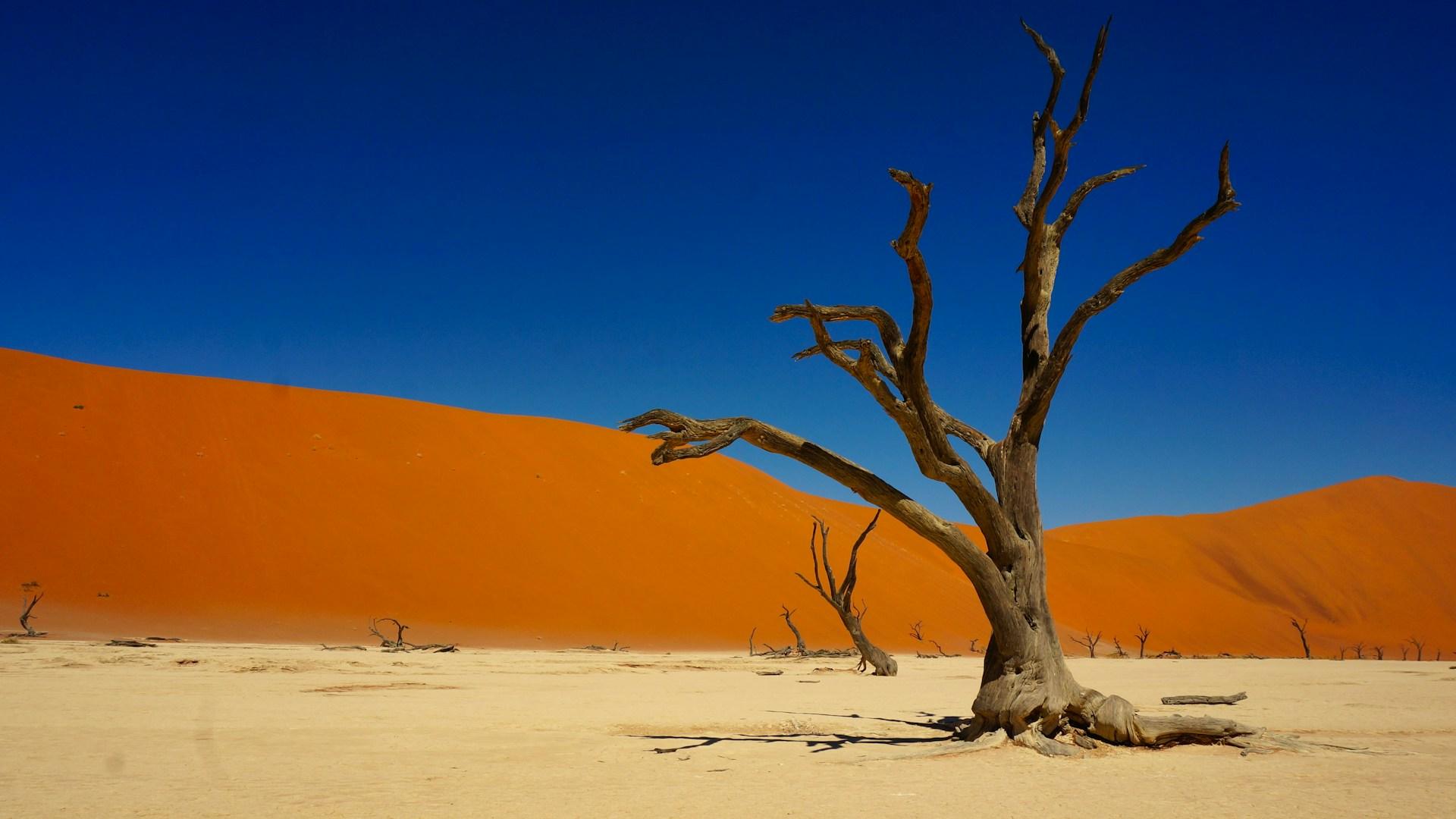
Sossusvlei is not the wildlife centerpiece of the country, but it matters because it explains the environment that shapes Namibia's animals. Oryx sightings and other desert-adapted species make sense here in a way they do not elsewhere.
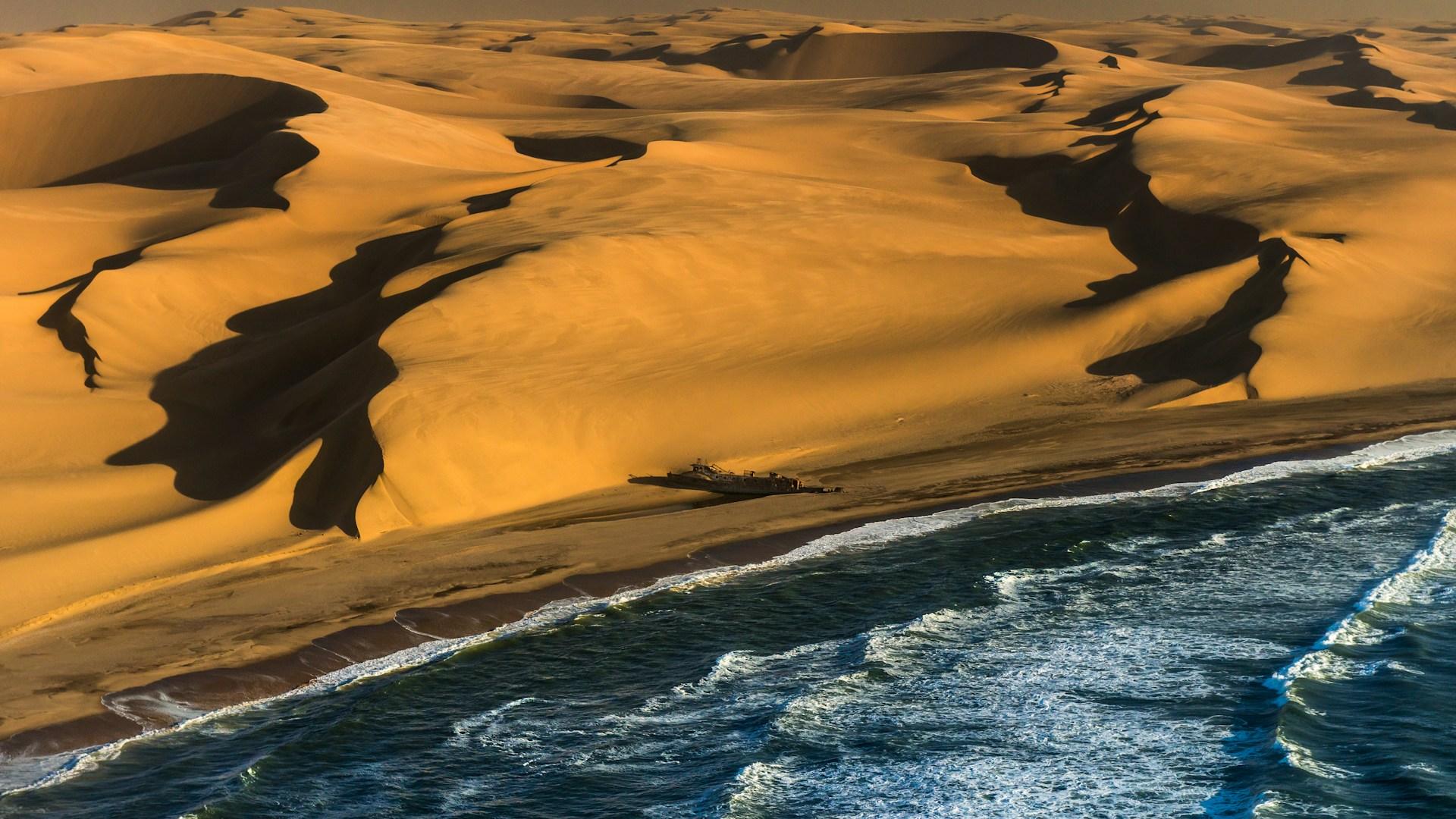
Remote, sparse, and extreme, the Skeleton Coast turns safari into a study of survival. This is where desert lions, seal colonies, and the meeting point of ocean and desert make Namibia feel unlike anywhere else in Africa.
These destinations solve different safari priorities. Keep the decision simple and choose the one that matches the feeling you want from the trip.
Season matters in Namibia because visibility changes with water availability. The best timing depends on whether you want the clearest wildlife patterns or a softer, less-traveled mood.
Best wildlife viewing
This is the clearest window for a Namibia safari, especially in Etosha. Water becomes scarce, animals gather at waterholes, vegetation thins out, and wildlife visibility improves dramatically. For most travelers prioritizing game viewing, this is the strongest recommendation.
Fewer crowds, dramatic skies
Rain and cloud build more atmosphere into the landscapes, and the country feels even quieter. Namibia wildlife becomes more dispersed as water is easier to find, so sightings can be less concentrated, but the mood is beautiful if you care about space and seasonality as much as pure viewing efficiency.
If your priority is animal visibility, choose the dry season. If your priority is mood, softer light, and fewer travelers, the green months still work well as long as you accept a less predictable rhythm. For many travelers, that trade-off is exactly what makes a Namibia safari feel different.
Namibia rewards travelers who choose a safari structure that matches the country's scale. Most visitors still lean toward guided itineraries because the distances are bigger than they first appear.
The best fit for most travelers. Guided Namibia itineraries smooth out long driving days, connect Etosha with desert regions more efficiently, and help you understand why the wildlife behaves differently here. Most travelers visiting Namibia for the first time choose guided safaris to simplify long distances and logistics.
Best for travelers who want to cover large distances without long road transfers. Fly-in trips work especially well if you want Etosha plus remote areas like the Skeleton Coast or desert camps with minimal time lost in transit.
Namibia is one of Africa's better self-drive countries, but many travelers still choose guided planning for convenience. Self-drive works best as a secondary option, not the defining reason to choose the destination.
Browse itineraries pulled from our Namibia tour listings, then open a tour to compare route design, wildlife focus, dates, and pricing.
We couldn't load Namibia tours right now, but you can still browse all available listings.
Explore Namibia ToursIf you want wildlife around Etosha's waterholes, desert-adapted animals, and a safari defined by open space rather than crowding, Namibia is one of Africa's most distinctive wildlife journeys.