Puma Tracking in Torres del Paine: Complete Guide 2026
· FaunaExplore

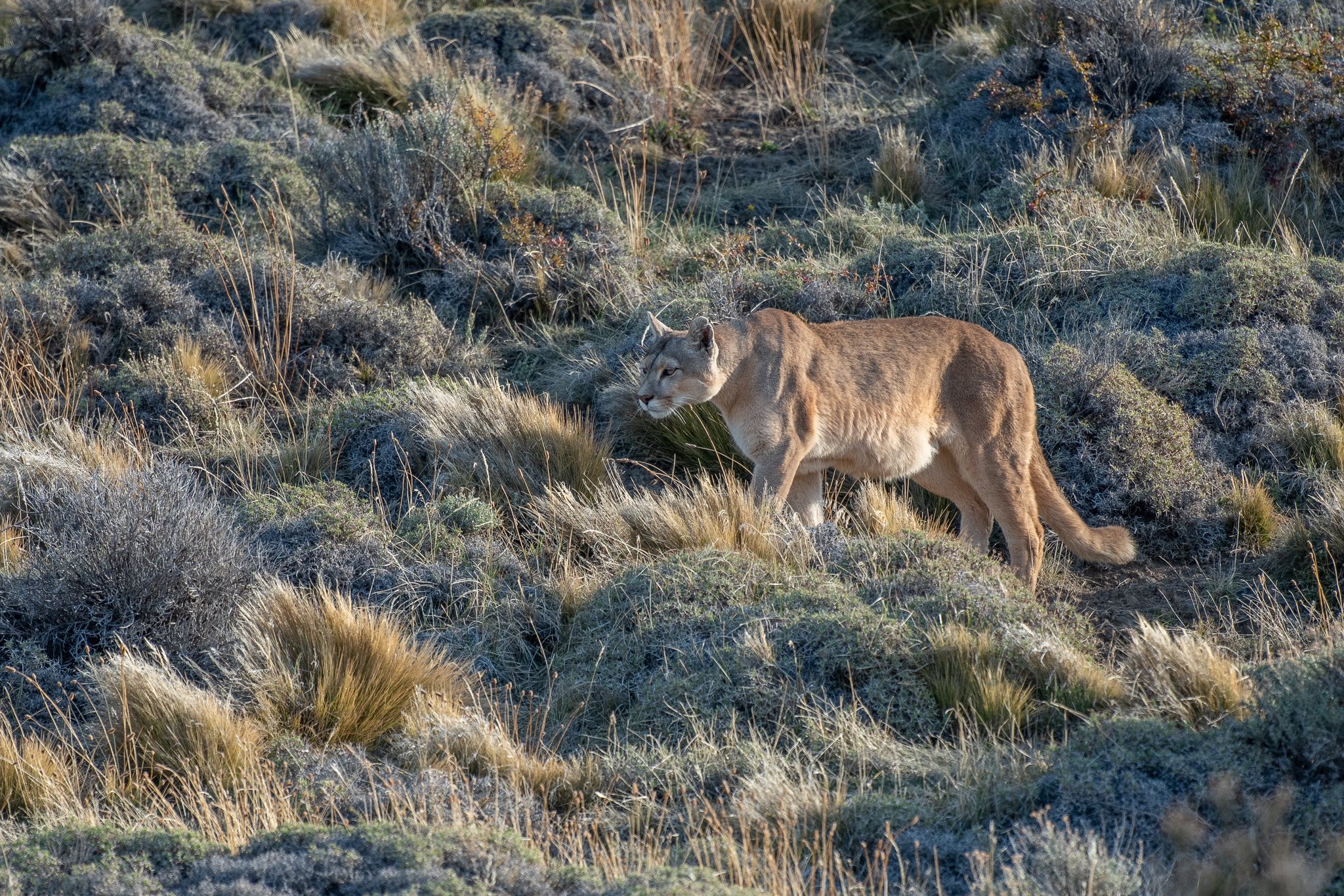
Torres del Paine National Park in Chilean Patagonia is the single best place in the world to see a wild puma. The cats live here year-round, so the main challenge is visibility, not presence. Visibility peaks in autumn and winter (roughly April to September), not the summer tourist high season.
You should plan on a minimum of three days of guided dawn-and-dusk tracking, based out of Puerto Natales, working the park's eastern sectors with a professional tracker. Sightings are never guaranteed, but well-run multi-day trips succeed a large majority of the time.
Why Torres del Paine is the puma capital of the world
Most places where pumas live, you will never see one. The species ranges from Canada to the southern tip of South America, which is the widest distribution of any large land mammal in the Americas. Yet across almost all of that range the cats are nocturnal, wary, and effectively invisible. Torres del Paine is the great exception.
Two things make the park extraordinary:
- The first is prey. The eastern grasslands support enormous herds of guanaco, the puma's primary food source in Patagonia, which in turn support one of the highest puma densities recorded anywhere on Earth.
- The second is protection. Decades of conservation and the end of hunting inside the park have produced pumas that no longer treat humans as a lethal threat. Over generations they have become unusually tolerant and, remarkably, unusually day-active, which is the opposite of puma behaviour almost everywhere else.
That relaxed relationship with people has revealed behaviour science had rarely, if ever, documented in the species. Torres del Paine pumas have been observed sharing kills and even hunting in loose social groups, something not seen in any other puma population. For a solitary cat, this is genuinely strange, and it's part of what draws researchers and photographers to this one corner of Patagonia rather than anywhere else.

Photo: Legend Safaris
Best time to see pumas in Torres del Paine
This is where a lot of general travel advice will steer you wrong. Torres del Paine's tourism high season and its puma high season are not the same. In fact, they're close to opposite. The busiest, sunniest months are the weakest for cats, and the cold, quiet months are the best.
In summer, tall vegetation hides the cats, guanacos disperse to higher ground, and the very long daylight hours spread puma activity thinly across a huge window. In autumn and winter, vegetation thins out, guanacos concentrate at lower elevations where they're easier for pumas to hunt, and short days compress that activity into the few daylight hours when you can actually watch it. Fewer tourists is a bonus on top.
| Season | Months | Puma visibility | What to expect |
|---|---|---|---|
| Autumn | April–May | Excellent | Guide-favourite window. Calm weather, spectacular fall colour, cubs sometimes visible, and thin crowds. April is the single most recommended month. |
| Winter | June–September | Excellent | Best raw visibility of the year. Guanacos low and concentrated, snow contrast, activity squeezed into short days. Cold and logistically demanding; the Serrano/Grey area also becomes productive |
| Spring | September–November | Good, improving | Transitional. Vegetation still low early on; conditions get busier as summer approaches. |
| Summer | December–February | Fair, hardest | General-tourism peak. Long grass, dispersed prey, and 15+ hour days that scatter sightings. Great for hiking, weakest for pumas. |
If you have any flexibility at all, aim for April. You get the calmest weather of the productive season, autumn colour for photography, a real chance at cubs, and a fraction of the summer crowds.
Where in the park you'll actually track
Puma tracking in Torres del Paine is concentrated in specific sectors, not spread across the whole park. The heart of it is the eastern side, the open steppe around Laguna Amarga and Lake Sarmiento. This is guanaco country, and where the guanacos are, the pumas follow. The rolling, relatively open terrain here is also what makes sightings possible in the first place: you need lines of sight to spot a cat resting on a ridge or moving along a slope.
In winter, the Serrano and Grey sectors on the park's western and southern side become more productive as prey and cats shift with the season. A good operator reads these movements and positions you accordingly rather than driving the same loop every day.
What a day of tracking looks like
Puma tracking in Torres del Paine is not a game drive where animals wander past a vehicle. It's a patient, active hunt built around the cats' rhythms, which is why it's structured around dawn and dusk, the hours when pumas are most likely to be moving and hunting.
A typical day starts before first light. You drive the eastern sectors in a 4WD, then work on foot to scan ridgelines, riverbeds, and rocky outcrops. The single most important tool isn't optics, but a professional tracker who knows individual cats, their territories, and their habits, and who reads the landscape for signs: fresh tracks, kill sites, circling condors, and above all the sharp alarm calls of guanacos, which betray a puma's location long before you'd ever spot it yourself. Once a cat is located, the approach is slow and on foot, keeping a respectful distance so the animal stays relaxed and natural.
Midday, when the cats typically rest, is for returning to base, eating, resting, and reviewing photos. Then you head back out for the evening session. It's cold, early, and physical, but when it works, you're watching a wild puma hunt or nurse cubs in open daylight, which almost nowhere else on the planet offers.

Photo: Legend Safaris
How many days you need
Treat three days of tracking as the absolute minimum, and understand that more is better. Pumas are wild and wide-ranging. A single day gives you one or two short windows and little margin if the weather turns or the cats move. Three-plus days let a tracker relocate known individuals across sessions, dramatically raising your odds and giving you time for genuinely good sightings rather than a distant glimpse.
This is why serious itineraries run a week rather than a weekend. Our 7-day Torres del Paine puma expedition is built around multiple consecutive tracking days for exactly this reason: the extra sessions are what convert "we saw a puma" into repeated, close, photographable encounters.
It’s worth noting that no ethical operator will ever guarantee a sighting; anyone who does is not being honest about wild animals. What a good multi-day guided trip does offer is a very high success rate, backed by trackers who spend the whole season with these specific cats.
Cost and logistics
Base town
Nearly all puma tracking in Torres del Paine runs out of Puerto Natales, the gateway town about two hours from the park's eastern entrances. It's where you'll sleep, eat, and stage each day's early departure. The nearest airport is Punta Arenas, roughly a three-hour drive further south, connected by daily flights from Santiago.
Park fees
Torres del Paine charges a CONAF (Chile's national forest service) entrance fee that is set per person, valid for a few consecutive days, and revised roughly every year. Recent 2026 figures for foreign adults have been quoted anywhere from the mid-$30s USD in some fee tables to around $49 USD (about 44,800 Chilean pesos) in others, with lower off-season rates.
The exact number depends on the season definition and when you buy. Because it changes, confirm the current rate on the official CONAF pass portal shortly before you travel. On an organised tour, park fees are often bundled into the package price, so check what's included.
What drives the price
Puma tracking in Torres del Paine sits at the premium end of wildlife travel. Our flagship Torres del Paine expedition starts at $13,000. That reflects private expert trackers, multiple tracking days, 4WD access, small group sizes, and the off-season logistics of operating in Patagonian autumn and winter. You're paying for the success rate and the access, not for luxury alone.
What to bring
Serious cold-weather layers, waterproofs, sturdy boots, binoculars, and a telephoto lens (300mm and up) if you're shooting. Winter especially demands proper gear.
For the wider regional context (other Chilean wildlife, when to go, and how puma tracking fits alongside the rest of the country), see the Chile destination page.
Frequently asked questions
Where to see pumas in Chile?
For a real chance of seeing a wild puma in Chile, head to Torres del Paine National Park in southern Patagonia. Pumas live across the country but are nocturnal and rarely seen almost everywhere else. Torres del Paine is the exception (very high density, open terrain, and daylight-active cats), with the eastern sectors around Laguna Amarga and Lake Sarmiento being the prime tracking grounds.
Are pumas dangerous?
Torres del Paine's pumas are among the least aggressive big cats toward people, and unprovoked attacks in the park are essentially unheard of. Generations without hunting pressure have made them tolerant of respectful human presence, which is exactly why tracking works here. That said, they remain powerful wild predators. Keep a proper distance, follow your tracker's instructions, never approach or corner a cat, and give mothers with cubs an especially wide berth.
Puma, mountain lion, cougar: what's the difference?
None. They're all the same species, Puma concolor, which holds a Guinness record for the animal with the most common names in English. "Puma," "mountain lion," "cougar," "catamount," and "panther" all refer to the same cat. In Patagonia, "puma" is the standard term.
Can you self-drive and see pumas?
It's possible. You can drive the eastern sectors around Laguna Amarga and Lake Sarmiento independently and, with luck and patience, spot a puma from the road. But your odds are far lower. Trackers know individual cats and their territories, read guanaco alarm calls and kill sites, and legally guide the on-foot approaches that produce close encounters. If seeing a puma is the point of your trip, a guided tracker is the difference between hoping and reliably succeeding.
What's the best month for photographers?
April. You get calm autumn weather, warm low-angle light, dramatic fall colour in the vegetation, and a genuine chance at cubs, all with far fewer people in frame. Winter (June–August) is the other strong choice if you want snow, stark contrast, and the very highest activity concentration, at the cost of harsher conditions and shorter shooting hours.
Ready for puma tracking in Patagonia?
Torres del Paine is the one place on Earth where watching a wild puma hunt in daylight is a realistic goal rather than a fantasy if you go in the right season, give it enough days, and track with people who know the cats.
Our Patagonia Puma Tracking & Photography Tour in Torres del Paine is built around every principle in this guide: the autumn–winter window, multiple consecutive tracking days, expert trackers, and the eastern sectors where the pumas hunt. Contact us for more information about this or any other tour you may be interested in.