Snow Leopard Tour Ladakh: Best Time & What to Expect
· FaunaExplore

The snow leopard is not an animal you happen across. You go to it, at altitude, in the coldest weeks of the Himalayan winter, and you earn every minute of the sighting.
The best place for a snow leopard tour in Ladakh is Hemis National Park, where a handful of valleys in and around the park produce most sightings. The season runs from November to April, with most tours between January and March, though the busiest months aren’t necessarily the best. Allow around ten days in total, including time to acclimatise in Leh.
It’s a demanding trip: high altitude, serious cold, and long hours of patient scanning with local trackers rather than close encounters. This guide covers why Hemis is the place to go, an honest month-by-month look at the season, which valleys to choose, what a tracking day really involves, and how to prepare for the cold and the altitude.

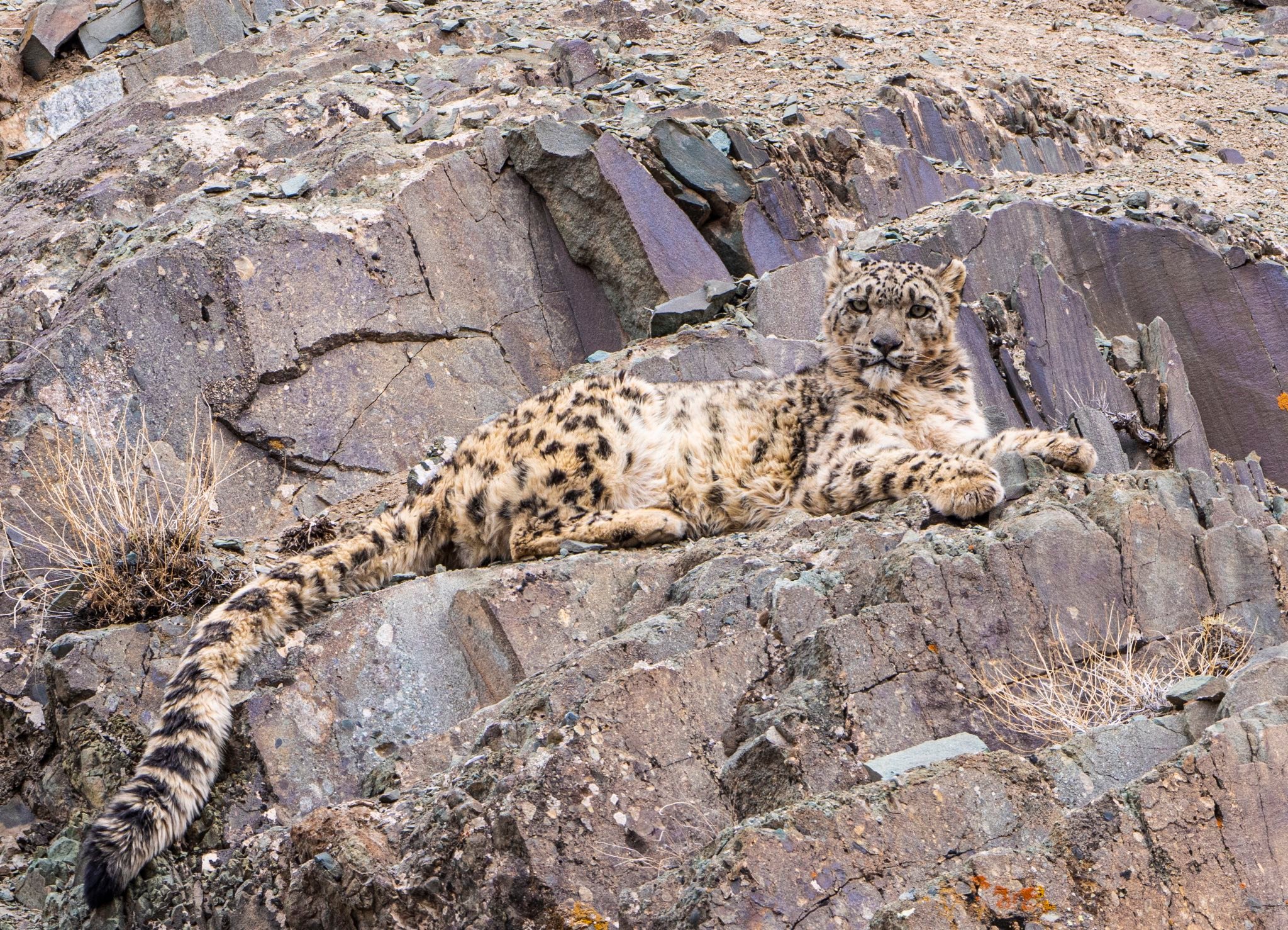
Photo: Legend Safaris
Why Hemis National Park is the best place for snow leopards
Ladakh is the best place in India to see a snow leopard. A 2025 camera-trap study estimated about 477 snow leopards there, roughly 68% of the national population.
Hemis National Park is the most reliable snow leopard destination in India, and one of the best in the world. It sits in the trans-Himalayan rain shadow south-east of Leh: bare, folded mountains of scree and cliff, with almost no tree cover to hide an animal on the move.
Three things make it stand out:
- Density. Across Ladakh, researchers found an average of about one snow leopard per 100 sq km. In Hemis, the figure rises to as many as three, among the highest densities recorded anywhere.
- Winter prey movement. Snow and cold push blue sheep (bharal), the snow leopard's main prey here, down into the lower valleys. The cats follow, which brings them within scope range of the valley floor.
- An established tracking network. Local spotters have been reading these slopes for years. They know the favoured ridgelines, the scent-marking rocks and the routes between valleys, and they share news of fresh tracks and kills.
The local community model matters too. Village homestays in Rumbak and nearby settlements give families an income from snow leopard tourism, which has helped turn a livestock predator into an asset worth protecting.
About 61% of Ladakh's snow leopard records came from outside protected areas, in valleys shared with villages and livestock. That is why the Ulley Valley, outside the park boundary, is also a serious option. For a wider look at the species and expedition styles, see our snow leopard safari guide.

Photo: Legend Safaris
Best time to see snow leopards: an honest month-by-month guide
The snow leopard season in Ladakh runs from November to April. Most operators concentrate departures between January and March, when snow has pushed blue sheep into the lower valleys and the cats follow them down.
It is worth being honest about one thing. February and March are the busiest months, not provably the best. Sightings depend on snowfall, prey movement and recent activity far more than the calendar, so a quieter month with good local information can beat a crowded one.
| Month | What to expect | Crowds | Our take |
|---|---|---|---|
| November | Early winter. Snow cover is often light, so prey and cats may still be spread across higher ground. Days are crisp and clear. | Very few visitors | Real chances and real solitude. Good for travellers who value quiet scopes over peak-season odds. |
| December | Cold deepens and snow starts to bring prey lower. Short days. | Light | An underrated month. You may have a valley almost to yourself. |
| January | Deep winter, often the coldest month. Snow pushes blue sheep down the slopes. | Building | The traditional start of peak season. Pack for the hardest cold of the trip. |
| February | Core season. Fresh snow helps tracks show and cats move through lower valleys. Snow leopards are also in their mating season around now. | Busiest | Strong conditions, but expect other groups on the popular vantage points. |
| March | Still very good. Slightly milder temperatures and longer daylight. | Busy | A good balance of conditions and comfort. |
| April | Snow retreats and prey begins to move higher. | Quiet | Possible, but the cats are starting to disperse. Best treated as a shoulder month. |
If your dates are flexible, think about what matters most to you. If it's the classic winter conditions and the deepest local tracking network, go in February or March. If you'd rather have fewer people and are happy with a slightly more open search, consider November or December.
The valleys explained: Rumbak, Husing and Ulley
Most snow leopard tours in Ladakh are based in one of three areas. Good operators don't lock you into one. They move between them based on the latest reports from local spotters.
| Valley | Inside Hemis? | Access | Where you stay | What it's like |
|---|---|---|---|---|
| Rumbak | Yes | Walk in from the road head; no vehicle access to the village | Village homestays | The heart of Hemis snow leopard country. Classic blue sheep slopes, steep side valleys and a long history of sightings. |
| Husing | Yes | Side valley off the trail to Rumbak | Tented camps and nearby homestays | A narrow gorge with cliff bands close to camp, so cats can turn up on the slopes right above you. Popular, expect company in peak weeks. |
| Ulley | No, west of Leh, north of the Indus | Road access | Village homestays and a lodge | Around 4,000 m, with a community-based tourism model. Ibex are a major prey species here. Quieter, and a good base for lynx and other wildlife. |
Operators also use other side valleys of Hemis, such as Tarbuns and Shang, when activity shifts or the main spots get crowded. That flexibility is worth asking about before you book.
The right valley depends on the week. A team in Rumbak may hear of a kill in Husing at breakfast and be in position by mid-morning. This is where an established local tracking network earns its value.
What a tracking day actually involves
A snow leopard trek in India is mostly about patience. You will spend far more time watching than walking, and most of that watching happens through a spotting scope.
- Before dawn. Hot tea in the homestay kitchen while spotters head out to their first vantage points. Some will have left in the dark.
- First light. You walk to a scanning point, often a short but steep climb, and settle in. The guide and spotters work the ridgelines and cliff bands with scopes and binoculars. Dawn and the first hours of the morning are prime time.
- Reading the signs. Spotters look for clues as much as for the cat itself: fresh tracks in snow, scrapes and scent-marked rocks, a herd of blue sheep staring in one direction, or ravens and vultures gathering over a possible kill.
- Midday. Activity usually drops. You may return for lunch, move to a different valley on fresh news, or keep watching a promising slope.
- Afternoon to dusk. A second scanning session until the light goes. Then back to the warmth of a stove, a hot meal and the day's stories.
When a cat is found, it is usually on a far slope, often several hundred metres away or more. Instead of chasing, teams reposition carefully to get a better angle. A sighting might last a few seconds as the cat crosses a ridge, or hours if it is resting near a kill.
There will be days when nothing happens. That’s normal, and it's why trip length matters more than almost anything else.

Photo: Legend Safaris
Fitness and altitude: how hard is a snow leopard trek in India?
This is a serious trip, and it's better to know that before booking.
Altitude
Leh sits at roughly 3,500 m, and the tracking valleys run from about 3,300 m to 4,500 m. You fly straight into that height from sea level. Two full days of rest in Leh before heading into the field are mandatory because symptoms of acute mountain sickness, such as headache, nausea and poor sleep, are common in the first days.
Talk to your doctor before you travel, drink plenty of water, avoid alcohol early on, and tell your guide if you feel unwell. Good operators carry oxygen and first aid.
Cold
Daytime temperatures hover around -5 to 5°C. Nights drop to -20°C or lower, and wind makes a long scanning session feel colder still.
Plan for:
- A proper expedition down jacket and insulated trousers
- Thermal base layers you can add and remove
- Insulated boots rated well below freezing, with good grip on ice
- Warm gloves plus liner gloves for handling cameras and scopes
- A warm hat, a buff and glacier sunglasses
- A sleeping bag rated to around -20°C if your operator doesn't provide one
Fitness
The walking is not technical, but thin air makes short climbs feel hard. Expect uneven, sometimes icy trails, steep climbs to vantage points and, for Rumbak, a walk in from the road head. If you can walk a few hours on hilly ground at home, you'll manage. Training on stairs and hills in the months before will make the trip far more enjoyable.
Cost and logistics
Most of the cost of a snow leopard tour comes down to how long you stay, how small the group is and how good the local tracking network is. The logistics are simpler than you might expect: one flight to Leh, a few days to acclimatise, then into the valleys.
Getting there
In winter, the mountain passes into Ladakh are closed by snow, so you fly. Most travellers connect through Delhi to Leh, a short and spectacular flight over the Himalaya. Build in a buffer day at either end of your trip, as winter weather can delay flights.
A typical itinerary looks like this:
- Fly Delhi to Leh.
- Spend two days acclimatising in Leh, with gentle walks and perhaps a monastery visit.
- Transfer to Hemis or Ulley for six to eight days or more of tracking.
- Return to Leh and fly out.
Short trips of three or four days in the field are usually too optimistic. Longer is better because it gives the trackers more chances to find you a cat.
What a snow leopard tour costs
| Level | Typical price per person | What you usually get |
|---|---|---|
| Basic trekking | USD 2,000–4,000 | Local operators, simpler accommodation, larger groups, more variable logistics |
| Standard expedition | USD 4,000–7,000 | Smaller groups, structured logistics, experienced guides in known snow leopard areas |
| Premium and specialist | USD 7,000–15,000+ | Small groups, strong local tracking networks, more time in key valleys, often photography-focused guiding |
Price is driven mainly by trip length, group size, accommodation standard, whether domestic flights are included, and how strong the local spotting network is. Compare inclusions carefully. Park entry fees, village community fees and use of spotting scopes should be included in any serious expedition.
Camping or lodges?
Lodge and homestay options have improved a lot, and many tours are now based in village homestays or lodges rather than tents. Homestays are simple but warm, built around a kitchen stove, with home-cooked Ladakhi food. Some tented camps still operate, especially around Husing, for travellers who want to stay closest to the action.
Frequently asked questions
How cold is a snow leopard tour in Ladakh?
Very cold. Daytime temperatures are usually around -5 to 5°C, and nights fall to -20°C or below. Long, still scanning sessions at dawn feel colder than the thermometer suggests, so proper expedition clothing is essential.
How fit do I need to be?
Moderately fit. The walking is not technical, but altitude of 3,300–4,500 m makes short, steep climbs hard work. If you can comfortably hike a few hours on hilly ground, you'll cope. Allow two full days in Leh to acclimatise.
Is it camping or lodge-based?
Most tours now use village homestays, lodges and boutique hotels in Leh rather than tents. Some tented camps remain, mainly in the Husing Valley, for those who want to stay as close as possible to the tracking areas.
What are the realistic odds of seeing a snow leopard?
No one can guarantee a sighting, and you should be wary of any tour that promises one. With expert local trackers and a week or more in the field, you have a genuinely good chance. Operators often talk about week-long success rates of roughly 40–60% in good conditions, but there is no standard figure, and results vary a lot from one departure to the next.
Trip length, recent activity, snowfall and weather all play a part. Sightings are usually distant views through a spotting scope. For more on how expeditions work and what affects your chances, see our snow leopard safari guide.
What else will I see?
A lot. Blue sheep and Himalayan ibex are seen almost daily, and you have a fair chance of red foxes, Himalayan wolves, golden eagles and bearded vultures. With luck, and on itineraries that go looking for them, Eurasian lynx and Pallas's cat are possible too. The wildlife and the landscapes reward the trip whether or not a snow leopard appears.
If you want to see more of the country’s wildlife, from tigers to rhinos, explore our guide to wildlife travel in India.