Black Leopard Safari in Kenya: Where to See One (2026)
· FaunaExplore

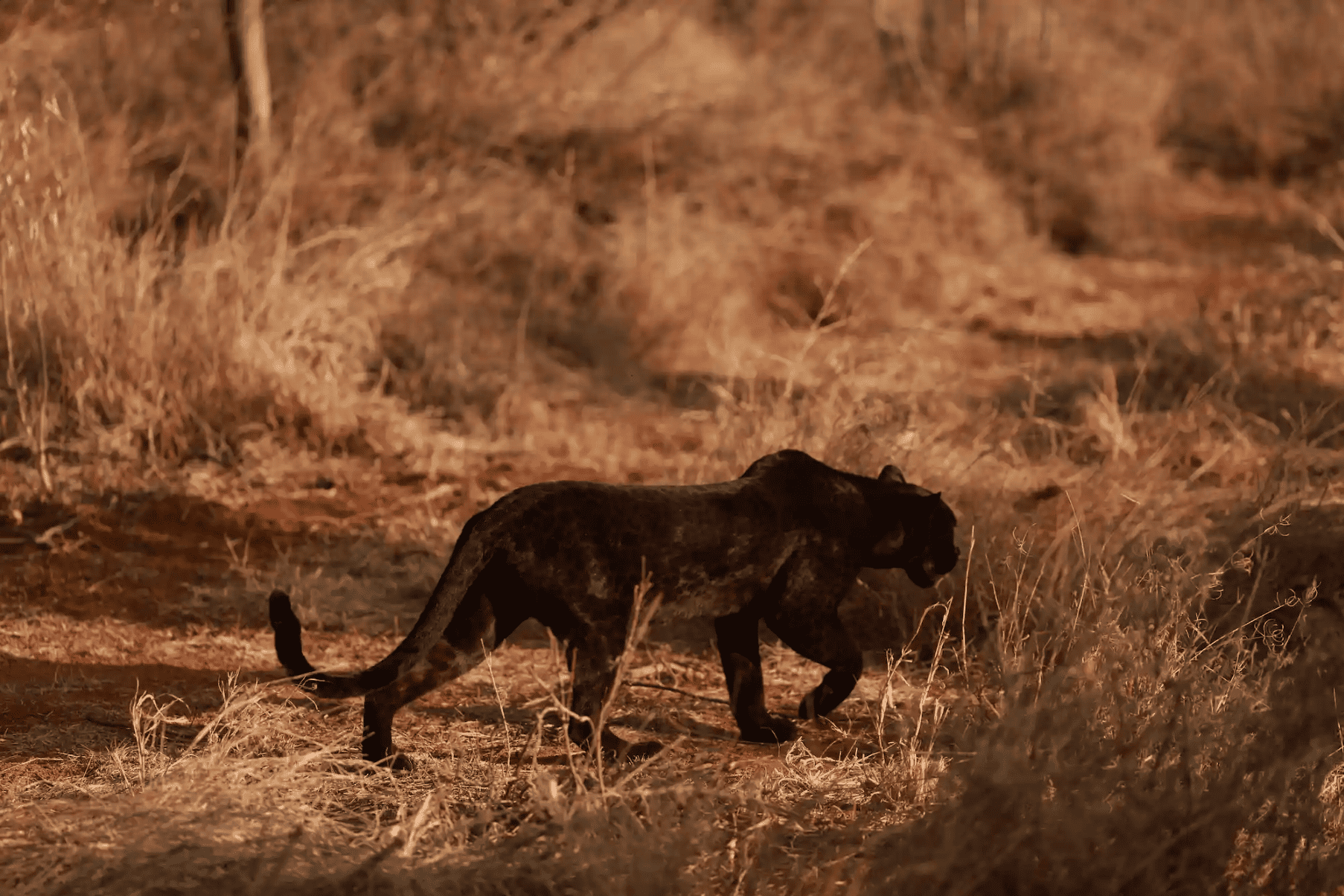
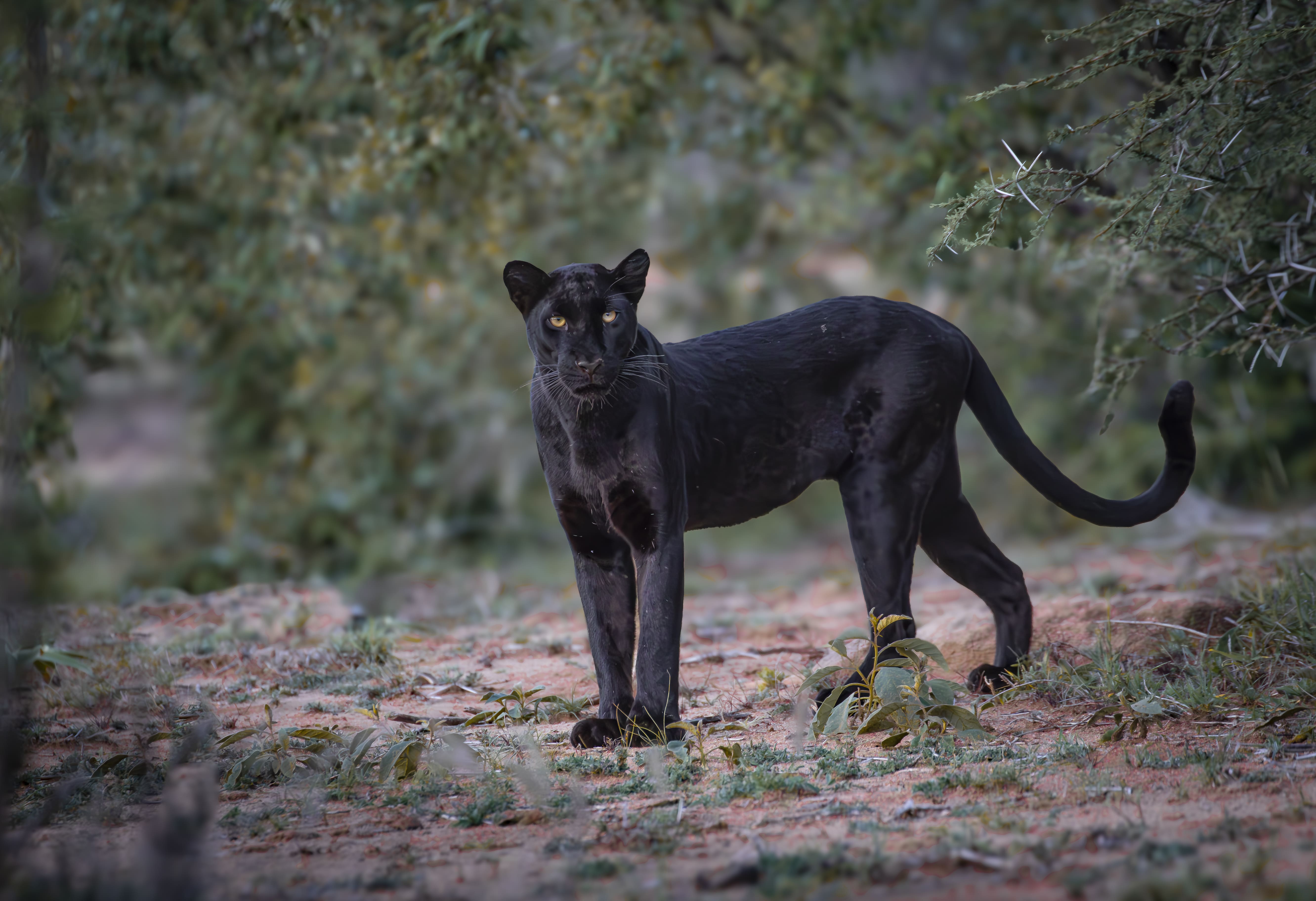
In the photographs, a leopard the colour of a moonless night lies with spots buried in the dark. But where can you actually see one in the wild?
The Laikipia Plateau in central Kenya, north of Mount Kenya, is the only place in Africa where wild black leopard sightings are realistically achievable. The epicentre is the belt of private conservancies around Laikipia Wilderness Camp in southern Laikipia, home range of a famous melanistic female known as Giza the black leopard.
However, sightings are never guaranteed. A dedicated stay of five to seven nights, with night drives and expert trackers, does give you a real but uncertain chance, while a single casual night almost never does.
Instead, you should come for the wider Laikipia experience and treat the black leopard as the bonus it truly is.
The backstory
For most of the twentieth century, the wild African black leopard sat somewhere between rumour and record. Reports drifted out of the highlands for decades, but for close to a hundred years the only confirmed photograph of one in Africa was a single specimen image taken in Addis Ababa, Ethiopia, in 1909. Everything else was second-hand.
That changed in the first weeks of 2019. In late January, researchers from San Diego Zoo Global's Institute for Conservation Research, working alongside Kenya's Loisaba Conservancy, published a study in the African Journal of Ecology documenting repeated 2018 sightings of a melanistic female in Laikipia County.
This was the first scientific confirmation of a wild black leopard in Africa in over a century. Lead researcher Nicholas Pilfold noted that the animals had been local knowledge for years, but what had been missing was proof.
Almost at the same moment, British wildlife photographer Will Burrard-Lucas released a set of high-quality camera-trap images shot at Laikipia Wilderness Camp, working from tips shared by the camp's owners and local trackers. As far as anyone could tell, they were the first crisp, close photographs of a wild black leopard ever taken on the continent. National Geographic, NPR and the BBC ran them, and the pictures went around the world.
Overnight, a quiet corner of central Kenya became the one place on Earth associated with the black panther of legend.

Photo: REP Kenya Safaris
Meet Giza, the beautiful darkness
The leopard most visitors come hoping to see is a female called Giza Mrembo, meaning "beautiful darkness" in Swahili (giza, darkness; mrembo, a beautiful one). She was born and raised barely a kilometre from Laikipia Wilderness Camp, which makes her unusual on two counts: she is melanistic, and she has grown up entirely at ease with vehicles. That combination is what produces the extraordinary sightings the region is now known for.
As of the 2025–2026 seasons, Giza is a mature adult, roughly seven years old, and still very much part of the landscape. She has become a mother, raising two golden-coated sub-adult cubs (a female and a male), neither of which inherited her dark coat. Exactly as genetics predicts, melanism is recessive, so a cub only shows it if both parents carry the gene. Her cubs are proof of just how rare the trait is, even in a bloodline that clearly carries it.
However, Giza is not the only one. At least three other melanistic leopards have been documented in the same conservancy, and guides and camera traps suggest perhaps half a dozen across the wider southern Laikipia landscape, though no one has an exact figure and the others are far more elusive than she is.
What are the honest odds?
This is the part most other pages skip, but the truth is that nobody can guarantee you a black leopard. Giza is a wild, free-roaming animal on her own territory. She is not collared, tracked around the clock, or baited. Guides find her by knowing her patterns, listening for alarm calls from other animals, and reading fresh sign. And some nights she simply does not show.
So our honest take is that you should come for Laikipia anyway and let the black leopard be the once-in-a-lifetime bonus, not the whole reason you flew.
What tips the odds in your favour is time and method. Trip reports from recent seasons run the full range: some guests, staying a week and going out morning and night, have seen Giza several times (even watching her hunt), while others on shorter visits left without a single glimpse.
The pattern is consistent enough to plan around:
- Stay long enough. A meaningful minimum is four nights in her range; five to seven nights meaningfully improves your chances. A one-night stopover is not a black leopard trip.
- Drive at night. Leopards are most active from dusk into the small hours and again before dawn. Laikipia's private conservancies permit spotlit night drives that national parks do not.
- Get priority access. The number of vehicles allowed at a sighting is deliberately capped. A private "Black Leopard Vehicle" buys you one of the limited slots when she does appear.
- Go with people who know her. The trackers who work this ground know Giza as an individual. That knowledge is the difference between a search and a lucky accident.
Set your expectations here and you almost cannot lose. If you see her, it is one of the great wildlife encounters on the planet; if you do not, you’ve still had one of Africa's best and least-crowded safaris. And if a page or an operator promises you a certain sighting, be sceptical because no responsible one does.

Photo: REP Kenya Safaris
Where exactly is Laikipia?
Laikipia is not a national park. It is a vast mosaic of private conservancies and community lands spread across the plateau north of Mount Kenya, and that model is central to why sightings happen here. Fewer vehicles, unfenced land that animals can move across freely, and permission for night driving all stack in the wildlife's favour. You can see how it fits into the country as a whole on our Kenya safari destination page.
Where to see a black leopard
The heart of the black leopard story is the southern Laikipia conservancy belt around Laikipia Wilderness Camp, set among rocky hills, gorges and the seasonal Ewaso Narok riverbed. Giza's territory laps across the camp's ground and neighbouring properties. The rocky outcrops give her cover and daytime lie-ups, and she crosses open ground at dusk to hunt the dik-dik that swarm the area.
The wider ecosystem (Loisaba, Ol Jogi, the Loldaiga hills, Borana and the Lewa fringe) provides the connectivity that keeps a healthy, genetically mixed leopard population moving through the landscape. The melanistic cats are concentrated in that southern belt, which is why serious black leopard trips base there rather than roaming the whole plateau.

What the safari is actually like
This is a superb safari whether or not the black one appears. Laikipia holds one of the highest leopard densities in Africa, so ordinary spotted leopards (the guides call them "golden" leopards) are a genuinely regular sighting. It is not unusual to tally several leopards in a couple of days here, a strike rate most famous parks cannot match.
Beyond leopards, the plateau is one of the richest wildlife areas in Kenya. African wild dogs den and hunt here and are a signature Laikipia species. You will likely see reticulated giraffe, the endangered Grevy's zebra, big elephant herds, buffalo, lion, and northern specials such as Beisa oryx and gerenuk, alongside night-drive oddities like striped hyena, aardvark, genet and porcupine.
Days are built around dawn and late-afternoon game drives, spotlit night drives, walking safaris, wild dog tracking and bush meals, with the guiding done in the local style: a driver-guide below and a tracker riding up top, scanning.
The ethics are taken seriously, and it matters to the experience. Vehicle numbers and time at a sighting are limited, red-filtered spotlights are used to reduce stress, and drives break off if a leopard needs space to hunt or seems uneasy. On our featured itinerary, drives to see Giza are also restricted to daytime and evening hours so the small hours are left to her. You can browse the region's trips in our black leopard safari collection.
Best time to go
Laikipia is a year-round destination, and its private conservancies never feel crowded whatever the month. That said, the dry seasons make tracking easier: thinner vegetation, wildlife concentrating near water, and firmer roads all improve your chances of finding a leopard.
- The long dry season, roughly June to October, is the strongest overall window, with maximum visibility (and some dust by late September).
- The short dry spell of December through February is the other sweet spot (cooler, quieter and with good light).
- The long rains of April and May are the season to avoid for this trip specifically, when some tracks become impassable, and the tall grass hides everything.
Whenever you go, the productive hours are the same: the dawn drive between roughly 6 and 8:30, and after dark. (We'd always suggest confirming exact conditions and camp operating dates against current guidance when you book.)
What a black leopard safari in Kenya costs
Costs vary with group size, season and how you travel, so treat the figures below as planning estimates rather than quotes. The single biggest lever is people per vehicle: sharing the cost of a private leopard vehicle across a small group brings the per-person price down sharply.
| Item | Typical range | Notes |
|---|---|---|
| Our 6-day tour, all-in on the ground | from ~$6,710 pp | FaunaExplore's 6-day Laikipia black leopard safari in Kenya: full board, game and night drives, wild dog tracking, private Black Leopard Vehicle, AMREF medical evacuation, Nairobi road transfers and pre/post night. From ~$6,710 pp at 6 guests; ~$7,454 pp at 4. |
| International flights to Nairobi (JKIA) | ~$700–$1,600 pp | Highly dependent on origin and season; not included in tour rates. |
| Nairobi–Nanyuki light-aircraft hop | ~$220 each way | Optional. Safarilink / AirKenya from Wilson Airport, roughly $150–$250 one way. Our featured tour includes road transfer from Nairobi instead, so this is only if you arrange your own air travel. |
| Park & conservancy fees | usually included | In Laikipia these are typically built into the nightly camp rate - unlike national parks, which charge separate daily entry. |
| Tips / gratuities | ~$25–$35 pp/day | Roughly $15–$20 for your guide plus $10–$15 shared among camp staff, per person per day. Not included. |
Two things to underline. First, the private Black Leopard Vehicle is not an upsell gimmick. With vehicle numbers capped at any sighting, it is what secures you a place when Giza appears. Second, Laikipia's "fees included" model means fewer nasty surprises than a national-park circuit, where daily entry fees mount quickly.
Frequently asked questions
Is Giza still alive and still being seen?
Yes. As of the 2025–2026 seasons, Giza is a mature female of around seven, seen fairly regularly around Laikipia Wilderness Camp and raising two golden-coated sub-adult cubs. She is wild and unpredictable, so regular is not the same as guaranteed, but she remains very much present and viewable.
Can a tour guarantee a black leopard sighting?
No, and you should distrust anyone who says otherwise. Giza is a free-roaming wild animal that is not collared or baited. A good operator maximises your probability (the right camp, a private leopard vehicle, night drives, expert trackers and enough nights), but the sighting itself is never promised.
Why are black leopards black?
A black leopard is not a separate species. It is an ordinary African leopard (Panthera pardus) with a genetic condition called melanism, in which extra dark pigment floods the coat. The rosettes are still there and you can often see them in raking light or in a camera's infrared at night. Because melanism is recessive, a cub only appears black if it inherits the gene from both parents, which is why the trait stays rare even where it exists.
Are there black leopards in the Masai Mara?
Not in any practical sense. The black leopard is a Laikipia phenomenon in Kenya; there is no reliably viewable melanistic leopard in Kenya and the Masai Mara ecosystem, or the southern parks. The Mara is superb for regular spotted leopards, but if a wild black leopard is your goal, Laikipia is the only realistic answer in Africa.
What camera gear do I need for night sightings?
Expect very low light, as sightings are often lit only by a red-filtered spotlight and moonlight, and flash is not used. A camera body with strong high-ISO performance and a fast lens (f/2.8 or faster, or a fast prime) will do far more for you than a long, slow zoom. Plan to shoot at high ISO, brace on a beanbag, and accept some grain; the resulting images are atmospheric rather than crisp. For daytime golden leopards and general wildlife, a 100–400mm or similar telephoto covers most situations.
Ready to try for the black leopard?
Our featured trip is built specifically around your best chance: six days in southern Laikipia, based in Giza's home range, with morning, evening and night drives, and a private Black Leopard Vehicle so you hold a priority slot when she appears. From ~$6,710 per person, full board, private leopard vehicle included.