Chile Wildlife: Pumas, Penguins, Atacama & Patagonia Guide
· FaunaExplore

Photo: Far South Expeditions
Chile wildlife is best understood as a corridor, not a single park. The country runs more than 4,000 km from the Atacama, the driest non-polar desert on Earth, to the sub-Antarctic fjords of Tierra del Fuego.
That range gives you three distinct wildlife worlds in one country:
- High-altitude flamingos and vicuñas in the far north
- Penguins and otters on the temperate coast around Chiloé
- Pumas, king penguins and humpback whales in Patagonia
Sightings are never guaranteed anywhere, but each zone has a season when the odds are genuinely good. The trick is matching your dates to the zone that matters most to you.
How wildlife in Chile is laid out
Most wildlife destinations are a park or a basin. Chile is a strip of land rarely wider than 200 km, stretched across almost 40 degrees of latitude, so travelling north to south feels like crossing several countries. Each zone has its own species, its own weather and its own best months.
A good itinerary is really a decision about which zones to include.
- The far north (Atacama and altiplano): high Andean plateau above 4,000 m, salt flats and lakes, plus the cold Humboldt Current along the coast. Look for flamingos, vicuñas, vizcachas and rheas inland, and seabirds offshore.
- The temperate south (Chiloé and the Lake District): Valdivian rainforest and a sheltered coast, home to mixed penguin colonies, marine otters, pudú and Darwin's fox.
- Patagonia and Tierra del Fuego: open steppe, fjords and the Strait of Magellan, with pumas, guanaco, condors, king penguins and feeding humpback whales.
Atacama wildlife and the altiplano (north)
When most travellers hear "Atacama", they picture San Pedro de Atacama. For Atacama wildlife, the stronger base is further north, in the Arica y Parinacota region. There, Lauca National Park, Las Vicuñas National Reserve and the Salar de Surire Natural Monument together form the Lauca Biosphere Reserve. This is where our northern itineraries go, and it is one of the most underrated wildlife regions in South America.
What you can see
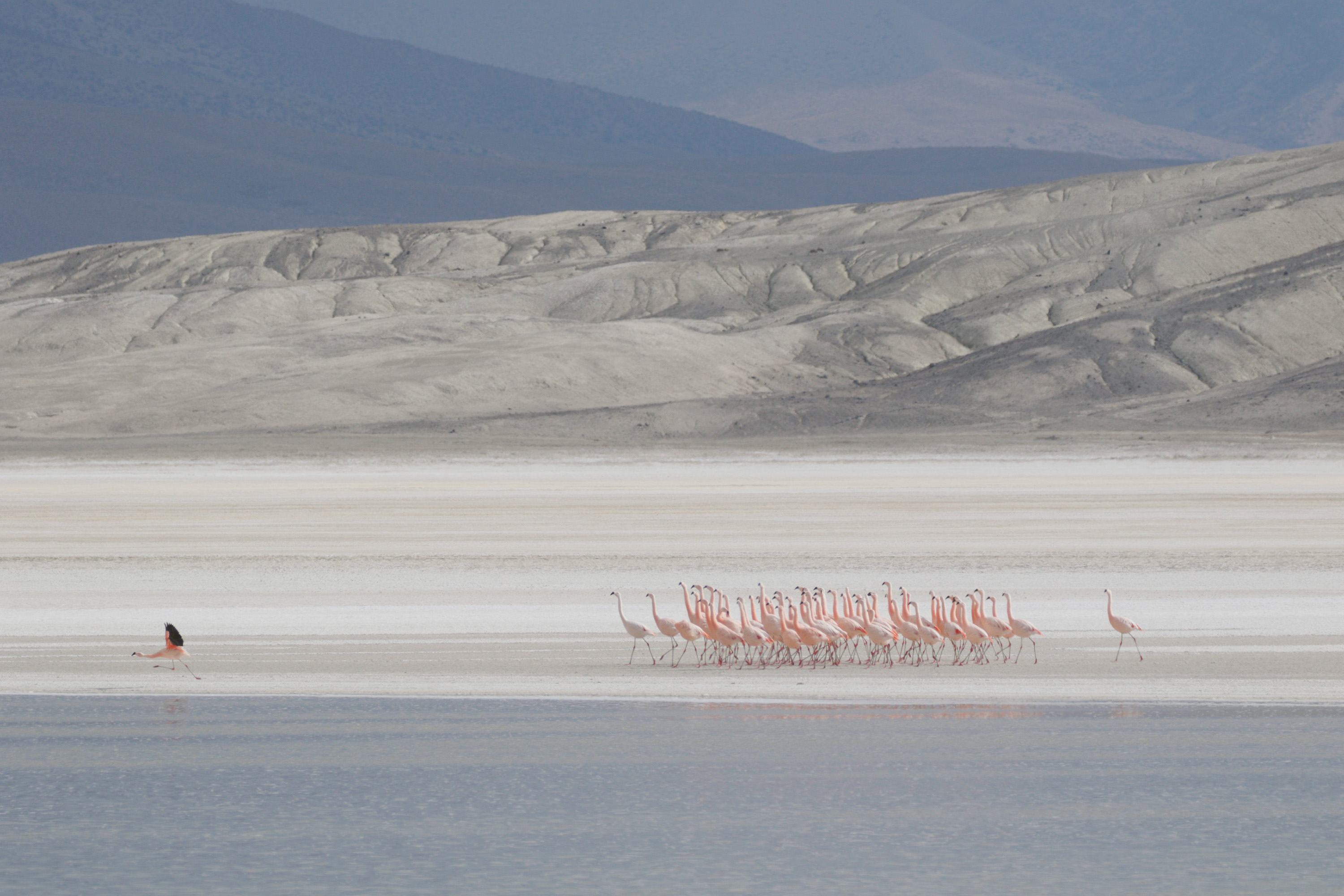
- Flamingos. The Salar de Surire is known above all for holding all three Andean flamingo species: Andean, Chilean and James's (also called puna) flamingo. Lake Chungará and the Lauca wetlands add more flamingos, alongside giant coots, Andean geese and puna teal.
- Vicuñas. Las Vicuñas National Reserve was created specifically to protect the vicuña, the wild ancestor of the alpaca. Herds grazing the bofedales (high wetlands) are a regular sight, though never promised.
- Vizcachas. These rabbit-like rodents sun themselves on rocky outcrops and are one of the more reliable mammals in Lauca.
- The supporting cast. Puna rhea, puna tinamou and taruca (the endangered northern Andean deer). With luck, an Andean fox crosses the road at dawn or dusk. Condors are possible but not a given here.
- The coast. Boat trips off Iquique work the Humboldt Current for Humboldt penguins, Peruvian pelicans, guanay cormorants, South American sea lions and common dolphins.
The altiplano photography angle
For photographers, the north is less about rare species and more about setting:
- Flamingos feeding below the twin Parinacota and Pomerape volcanoes
- Vicuñas against white salt crusts
- Frost on the bofedales at sunrise
The light at this altitude is hard and clear, and early starts pay off. Our 6-Day Northern Chile Wildlife and Altiplano Photography Expedition is built around these sunrise and sunset windows at Lauca, Chungará and Surire.

Photo: Far South Expeditions
Altitude is the real constraint
Lake Chungará sits at roughly 4,500 m, and Putre, the usual gateway town, at around 3,500 m. Spending at least one night in Putre before going higher is standard practice. A good itinerary climbs gradually rather than driving straight up from the coast. If you have heart or lung conditions, talk to your doctor before booking.
What about San Pedro de Atacama?
San Pedro and the Los Flamencos National Reserve also offer flamingos and vicuñas, with more tourist infrastructure and a busier feel. It suits independent travellers combining wildlife with stargazing and landscapes. If wildlife is your main reason for going north, the Lauca and Surire circuit is quieter and more concentrated.
The bridge: Chiloé and the temperate south
Between the desert and Patagonia sits a zone many itineraries skip and the longer tours deliberately include. Off Chiloé Island, the Puñihuil islets are one of the few places where Humboldt and Magellanic penguins breed side by side.
- The nearby Chepu River is good for southern river otter.
- The Valdivian rainforest around Tepuhueico Park is home to pudú (one of the world's smallest deer) and the endangered Darwin's fox.
- Boat trips can add marine otters, Peale's and Chilean dolphins and, in some seasons, blue whales offshore.
Our 14-Day Patagonia Wildlife Tour for Pumas, Penguins and Rare Birds spends its first week here before heading south.

Photo: Far South Expeditions
Patagonia wildlife tour highlights (south)
Patagonia is the reason most people search for wildlife in Chile, and for good reason. It combines the best puma viewing on Earth with king penguins and feeding whales, all within reach of Punta Arenas and Puerto Natales.
Pumas in Torres del Paine
Torres del Paine is the one place in the world where watching a wild puma in daylight is a realistic goal rather than a fantasy. Three things make it work: strong guanaco populations, open steppe, and decades of protection. Together they have produced cats that are unusually tolerant of people and unusually active by day. Tracking is concentrated in the park's eastern sectors, guided by professional trackers who read guanaco alarm calls, kill sites and circling condors.
We cover this in depth in our complete guide to puma tracking in Torres del Paine. It explains the best park sectors, what a tracking day looks like and how many days you need. The short version: plan at least three days of tracking. If pumas are your priority, travel between April and September, when thinner vegetation and concentrated prey make the cats easier to see. For how tracking works in the field and what affects your odds, see our puma safari experience page.
Our puma-focused trips include:
- 6-Day Patagonia Puma Tracking and Wildlife Photography Expedition (from $5,915)
- Patagonia Puma Tracking & Photography Tour - Torres del Paine, Chile (from $14,500)

Photo: Far South Expeditions
King penguins on Tierra del Fuego
In 2010, a group of around 90 king penguins came ashore at Bahía Inútil (Useless Bay) on the Chilean side of Tierra del Fuego. A local landowning family protected the site, and the first chicks hatched in 2013. Today the Reserva Natural Pingüino Rey is the most accessible king penguin colony outside the sub-Antarctic islands and Antarctica.
The colony is small, in the dozens rather than the thousands. Visitors watch from a fixed viewing area at a distance, which keeps disturbance low. Getting there means a ferry across the Strait of Magellan and a long drive on gravel, so it works best as part of a guided trip. The reserve opens seasonally, roughly spring to autumn, so check current dates with the reserve before you travel.
Whales in the Strait of Magellan
Francisco Coloane Marine Park, Chile's first marine protected area, was created to safeguard a humpback whale feeding ground near Carlos III Island in the Strait of Magellan. Humpbacks gather here to feed roughly from December to April, though the start and end shift a little each year. Boat days can also bring sea lions, fur seals, Magellanic penguins and black-browed albatrosses, and occasionally orcas or sei whales.
Our 11-Day Patagonia Wildlife Expedition for Pumas, King Penguins and Whales includes two nights in this area after the puma and king penguin sections.
Condors and the supporting cast
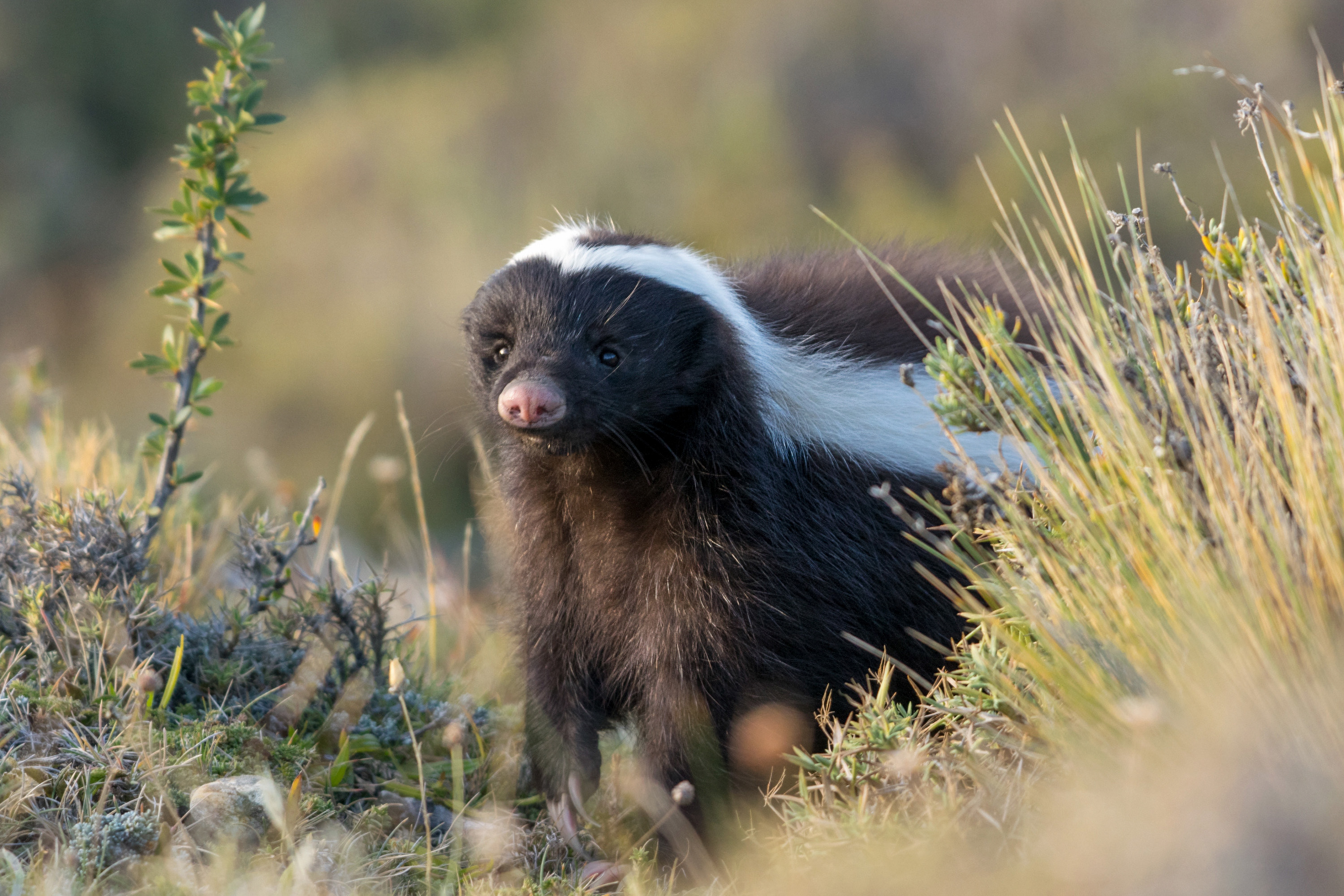
Andean condors are one of the easier big birds to see in Patagonia. They ride the wind over Torres del Paine's ridgelines and gather at kills. Guanaco are everywhere on the steppe. A typical day can also bring grey and culpeo foxes, lesser rheas, Patagonian hog-nosed skunks, flamingos on the lagoons and upland geese. Our 19-day corridor tour adds a dedicated condor stop at Río Verde, plus Magdalena Island's Magellanic penguin colony.
Where to see penguins in Chile
Chile has three regularly visited penguin species, and with the right route you can see all of them on one trip.
| Species | Where | Best months (planning guide) |
|---|---|---|
| Humboldt penguin | Coast off Iquique; Puñihuil islets, Chiloé | Puñihuil: roughly October to March |
| Magellanic penguin | Puñihuil (Chiloé); Magdalena Island near Punta Arenas | Roughly October to March/April |
| King penguin | Reserva Natural Pingüino Rey, Bahía Inútil, Tierra del Fuego | Reserve opens seasonally (confirm dates); chicks visible December to January |
Colonies and opening dates vary from year to year, so treat these as planning windows rather than fixed seasons.
When to go: Chile wildlife by zone
The best time to see wildlife in Chile depends on the zone, because no single month suits them all.
- The north is best in its dry season.
- Pumas are easiest to see in the austral autumn and winter.
- Penguins and whales peak in the austral summer.
Here is how the zones line up.
| Zone | Best window | Workable | Harder | Notes |
|---|---|---|---|---|
| Altiplano (Lauca, Surire) | May to November (dry, clear skies) | Most of the year | December to March | Summer brings the "altiplanic winter": afternoon storms, snow and occasional road disruption |
| Chiloé penguins and otters | October to March | April | May to September (penguins disperse at sea) | Rain is possible year-round |
| Pumas, Torres del Paine | April to September (April is the standout month) | October to November | December to February | Pumas live there year-round; summer means long grass, dispersed prey and long days |
| King penguins, Tierra del Fuego | December to February | October, November, March, April | May to September | Check reserve opening and ferry schedules |
| Humpbacks, Strait of Magellan | January to February | December, March, April | May to November | Season edges vary each year |
Patterns vary year to year with weather and prey, so use this table to shortlist months rather than to guarantee them.
The honest trade-off is this. Our combined itineraries depart in November and December, when penguins, whales and the altiplano line up well. That means puma odds on those trips are good rather than peak. If pumas are the main reason you are going, add a dedicated April or winter puma trip, or choose a puma-only departure.
Chile safari itinerary logic: one zone or the full corridor
A Chile safari does not look like an African one. There are no game drives through a single reserve. Instead, you move between zones by domestic flight, and each zone is worked on foot, by 4x4 and by boat. That makes trip length the main decision.
- 6 days, one zone. Enough to do the altiplano properly, or to give puma tracking the four or more field days it needs. Best if you have one clear priority.
- 11 to 14 days, Patagonia in depth. Pumas plus king penguins and whales (11 days), or Chiloé's penguins and rainforest plus Tierra del Fuego and Torres del Paine (14 days). The sweet spot for most first-time visitors focused on the south.
- 19 days, the full corridor. Desert coast, altiplano, Chiloé, Patagonia and Tierra del Fuego in one trip. The best way to see the range of wildlife in Chile, but only if you have the time and are comfortable with several internal flights.
Chile wildlife tour costs (live prices)
| Tour | Days | Zones covered | From (per person) | Approx. per day | Listed departures |
|---|---|---|---|---|---|
| 6-Day Northern Chile Wildlife and Altiplano Photography Expedition | 6 | Iquique coast, Lauca, Surire | $3,663 | ~$610 | November 2027, November 2028 |
| 6-Day Patagonia Puma Tracking and Wildlife Photography Expedition | 6 | Torres del Paine | $5,915 | ~$985 | 11 departures incl. December 2026, April, July and September 2027 |
| Patagonia Puma Tracking & Photography Tour - Torres del Paine, Chile | 7 | Torres del Paine (Laguna Amarga) | $14,500 | ~$2,070 | November 2027 |
| 11-Day Patagonia Wildlife Expedition for Pumas, King Penguins and Whales | 11 | Torres del Paine, Tierra del Fuego, Strait of Magellan | $10,328 | ~$940 | December 2026, 2027, 2028 |
| 14-Day Patagonia Wildlife Tour for Pumas, Penguins and Rare Birds | 14 | Chiloé, Tierra del Fuego, Torres del Paine | Price on request | – | On request |
| 19-Day Chile Wildlife Expedition from the Atacama Desert to Patagonia | 19 | Full corridor | $14,654 | ~$770 | November 2027, November 2028 |
Prices are per person as listed at the time of writing; confirm at booking. See all Chile tours for current dates.
What drives the price
The biggest factor is specialist field time. Puma tracking needs trackers who know individual cats. The most expensive option above includes two puma guides and a professional tracker authorised by Estancia Laguna Amarga, private estancia access and a photo catalogue of identified pumas.
Group size matters too. All of these trips run with six or fewer guests (seven on the 14-day trip), which keeps sightings calm but spreads costs across fewer people. Longer corridor trips come out cheaper per day, because travel days and lower-cost zones like the altiplano balance out the premium days in Patagonia.
Costs on top of the tour price (planning estimates)
- International flights to Santiago: excluded on every tour above.
- Domestic flights (Santiago to Iquique or Arica, to Chiloé, and to Punta Arenas or Puerto Natales): excluded on the Far South Expeditions trips. Budget several hundred USD per person for a corridor trip.
- Park fees: included on all tours listed. If you travel independently, Torres del Paine fees are paid through CONAF's official pass portal.
- Tips, travel insurance and personal expenses: excluded throughout. Insurance should cover remote areas and high altitude.
- Single supplements: vary by tour; the 6-day puma trip lists a $400 single-room supplement.
Frequently asked questions
Chile or Argentina for Patagonia wildlife?
For pumas, Chile. Torres del Paine's eastern sectors have the most established tracking system and the most habituated cats, and that is where every puma trip on FaunaExplore operates. Chile also has the king penguin colony on Tierra del Fuego and the humpback feeding grounds in the Strait of Magellan.
Argentina is the stronger choice for some marine wildlife, especially orcas and southern right whales on the Atlantic coast. Our 6-Day Patagonian Orca Tracking and Wildlife Photography Expedition covers that side. Many travellers do Chile first, then add Argentina on a later trip.
Can you combine the Atacama and Patagonia in one trip?
Yes, but it takes time. The two regions are thousands of kilometres apart and linked by domestic flights via Santiago or Puerto Montt. Our 19-Day Chile Wildlife Expedition from the Atacama Desert to Patagonia does it in one continuous route, with Chiloé in between. With less than two weeks, pick one zone and do it well rather than rushing both.
Is Chile safe and easy for a wildlife trip?
Chile is one of the more straightforward countries in South America to travel in, with good domestic flights and reliable infrastructure. The US State Department currently rates it at Level 2, "exercise increased caution", mainly for crime and civil unrest. Both concentrate in cities, particularly parts of Santiago.
In wildlife areas, the main practical risks are altitude in the north, fast-changing weather in Patagonia and long drives on gravel roads. A guided trip handles all of these for you. Check your own government's travel advice before booking.
What is the best single month for wildlife in Chile?
It depends on your priority:
- Full corridor: November is the best compromise. The altiplano is still dry, penguin colonies are active, the king penguin reserve is open and puma conditions are good and improving.
- Pumas alone: April is the standout month.
- Whales and king penguin chicks: aim for December to February.
Plan your Chile wildlife trip
Start with the zone that matters most to you, then decide whether to add more. If it is pumas, read our Torres del Paine puma guide and pick an autumn or winter departure. If you want the whole country, the corridor trips are the most efficient way to see it.
For an overview of the destination, see our Chile destination page. You can also browse all Chile wildlife tours or contact our team for help matching dates to the wildlife you want to see.


.jpg)