Snow Leopard vs Tiger Safari: Which India Big Cat Trip?
· FaunaExplore

Photo: Legend Safaris
Choosing between a snow leopard vs tiger safari means choosing between two very different big cat safaris in India. One is a jeep drive through central Indian forest, while the other is a high-altitude expedition spent scanning frozen Himalayan slopes through a spotting scope.
Our honest recommendation for a first big cat trip is to choose a tiger safari in central India. The parks are open from October to June, the days are comfortable, and most visitors see a tiger within 6–10 drives in a high-reliability park.
Choose a snow leopard expedition in Ladakh if you are a committed wildlife traveller ready for altitude, nights of −20°C and long waits for one distant, unforgettable sighting. And if you want both, February and March let you combine them.
For the full detail on each, see our park-by-park tiger safari guide and our snow leopard tour guide to Ladakh.
Snow leopard vs tiger safari at a glance
| Tiger safari (central India) | Snow leopard expedition (Ladakh) | |
|---|---|---|
| Where | Bandhavgarh, Kanha, Pench, Tadoba, Satpura | Hemis National Park (Rumbak, Husing) and the Ulley Valley |
| Season | October to June; best sightings February to May | November to April; most tours January to March |
| Terrain and fitness | Seated in an open jeep; little walking | 3,300–4,500 m altitude, steep climbs to vantage points |
| Climate | Cool winter mornings; April and May can top 40°C | Days around −5 to 5°C; nights −20°C or lower |
| Sighting style | Morning and afternoon jeep drives in assigned zones | Scanning ridges from fixed points with spotting scopes |
| Typical sighting | Often close range along forest tracks | Usually several hundred metres away or more |
| Honest odds | Most visitors see a tiger within 6–10 drives in a high-reliability park | Operators often cite roughly 40–60% for a week in good conditions |
| Time needed | 5–7 days minimum; 8–11 days for two or three parks | About 10 days, including two days to acclimatise |
| Cost | Our tours from $3,850 (8 days) | Typically $4,000–7,000 for a standard expedition; ours from $9,500 (18 days) |
| Photography | Varied: close portraits, cliffs, open meadows | Landscape-scale: a distant cat in vast terrain |
| Best for | A first big cat trip | Committed wildlife travellers |
Keep in mind that patterns vary from year to year, and neither cat is ever guaranteed.
When to go: Ladakh or central India?
The two seasons overlap more than you might expect. Central India's tiger reserves are open from October to June, and their core zones close for the monsoon, roughly July to September. Sightings peak from February to May, when water is scarce, the forest thins and tigers stay near waterholes.
Ladakh's snow leopard season runs from November to April, when snow pushes blue sheep, the cats' main prey, into the lower valleys, and the leopards follow. February and March are the busiest months, but not provably the best. A quiet November or December with good local information can beat a crowded week.

Photo: Legend Safaris
Terrain, fitness and comfort
A tiger safari asks little of your body. You sit in an open jeep for a morning and an afternoon drive, then return to a lodge. The hardships are early starts and, from April, serious heat. Satpura, with its guided walking safaris, is the exception.
A snow leopard trip is a different beast (pun intended). Leh sits at about 3,500 m and the tracking valleys reach 4,500 m, so two full days of rest in Leh are mandatory. The walking is not technical, but thin air makes short climbs feel hard. If you can hike a few hours on hilly ground at home, you will cope, as long as you pack proper expedition clothing.
Sighting style: jeep drives vs scope scanning
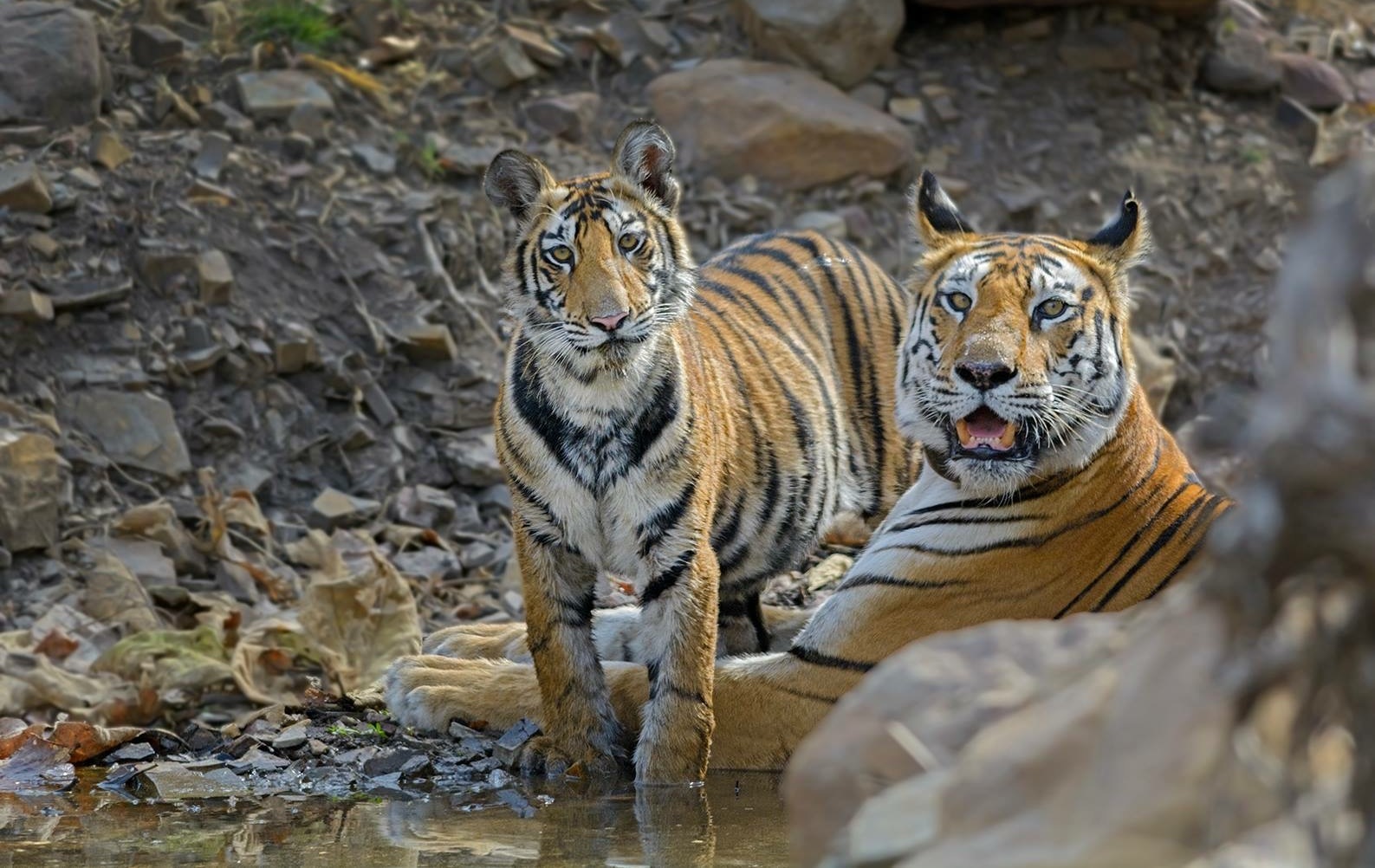
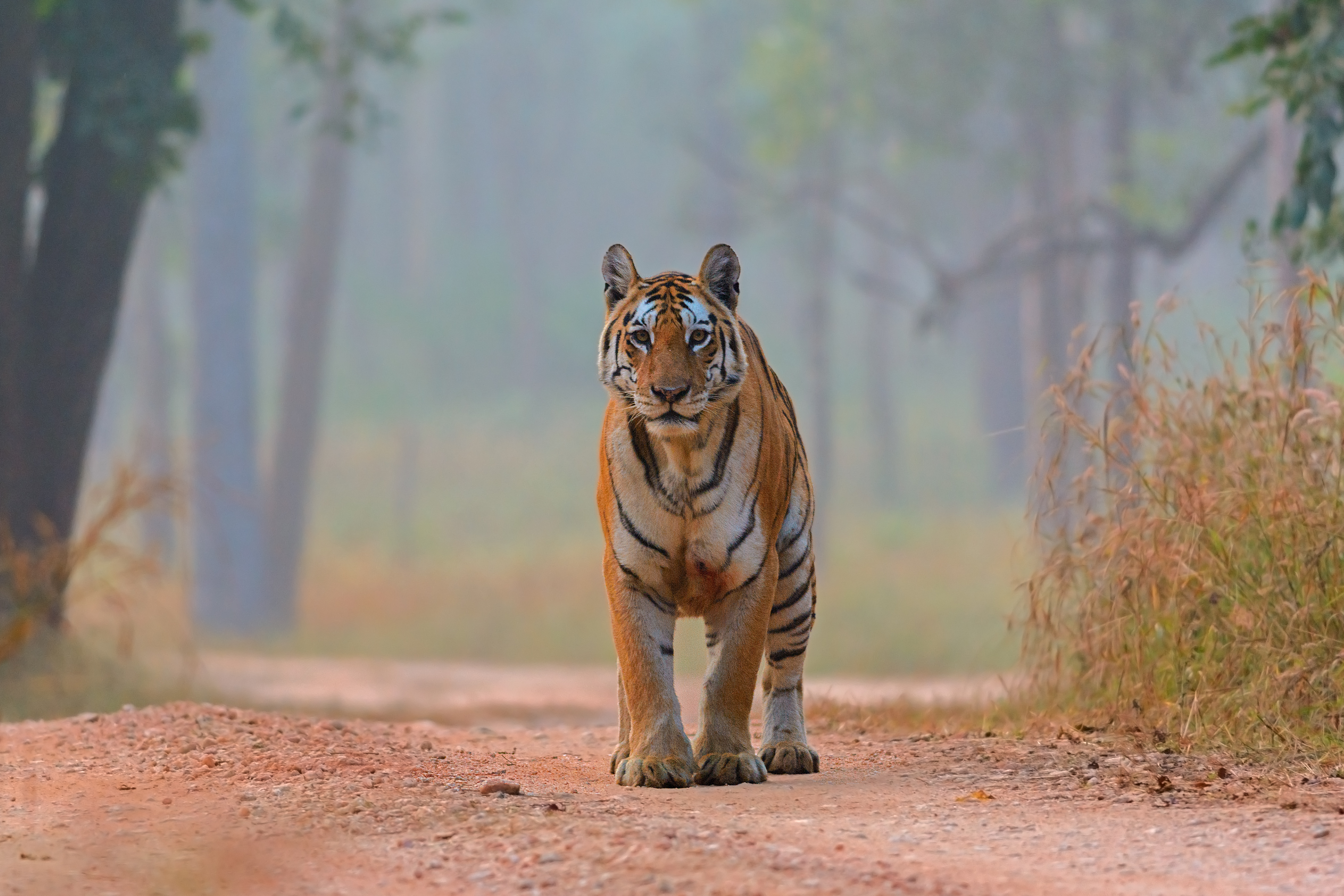
On a tiger safari, your permit covers one zone, one session and one vehicle. Guides read fresh pugmarks and alarm calls, then wait at likely crossings. When a tiger appears, it is often close, and in Bandhavgarh many tigers are relaxed around vehicles.
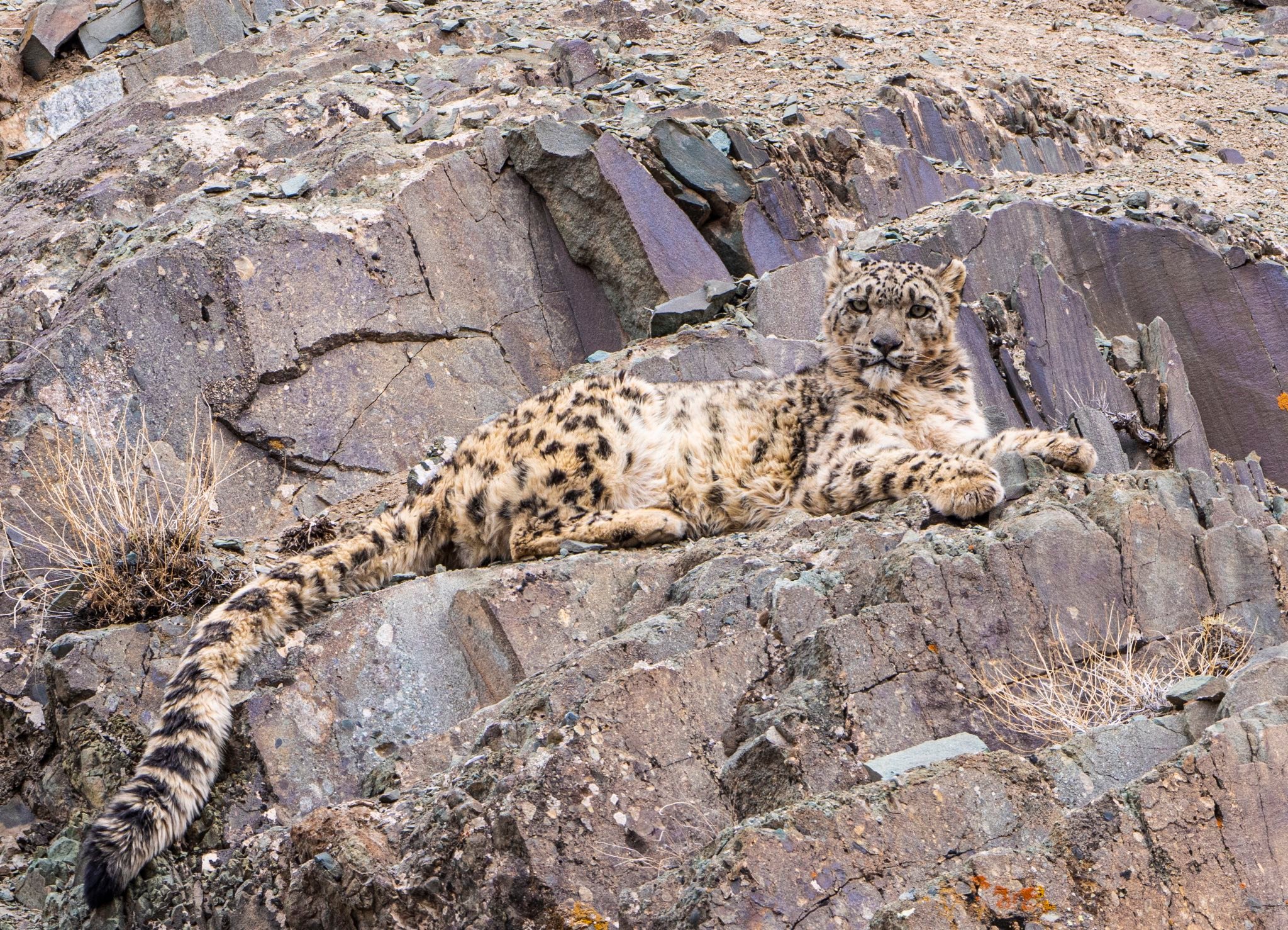
On a snow leopard expedition, you spend far more time watching than walking. Local spotters scan the ridgelines from first light for fresh tracks, scent-marked rocks or blue sheep all staring one way. A cat is usually found on a far slope, and teams reposition carefully rather than chase it. Some departures find one within days; others finish without one despite excellent guiding.
Both trips reward patience. But a quiet tiger drive costs you one session, while a snow leopard search can go days without a result. That is why trip length matters even more in Ladakh.

Photo: The Bridge Tours
Cost
A tiger safari is the cheaper trip. Our central India tours run from $3,850 for the Tiger Trail India: 8-Day Safari Across Kanha, Pench & Tadoba to $5,245 for the 11-Day Central India Tiger Safari: Kanha, Pench & Tadoba Wildlife Expedition.
Snow leopard expeditions cost more because of the specialist set-up: local spotting networks, small groups, heated homestays and a flight to Leh. Planning ranges run from $2,000–4,000 for basic trekking to $7,000–15,000+ for premium specialist trips. Our 18-day Snow Leopard Safari in Ladakh - Lynx & Pallas's Cat Wildlife Expedition starts from $9,500, including domestic flights, spotters, scopes and community fees.
On both, international flights, visas, insurance and tips are usually extra.
Photography
Central India gives photographers variety: tigers on Bandhavgarh's rocky outcrops, misty Kanha meadows, Tadoba tigers cooling off in waterholes and Satpura's gorges for wide environmental shots.
Ladakh is about scale. Most sightings are distant, so the strongest images often show a small cat in a vast, bare landscape. If photography is your priority, choose a departure with photography-focused guiding and more time in the key valleys.
Which big cat safari in India is right for you?
Choose a tiger safari if:
- This is your first big cat trip, or your first wildlife trip in India.
- You want a realistic chance of a close sighting within a week.
- You prefer comfortable lodges and little physical effort.
- You would be disappointed to go home without seeing your target animal.
Choose a snow leopard expedition if:
- You have already done a classic safari and want something rarer.
- You enjoy trekking, cold mountain air and long, quiet observation.
- One distant sighting of the world's most elusive big cat would justify the whole trip.
- You can accept coming home without one, and still value the landscape and other wildlife.
Our honest advice is to start with tigers. A tiger safari teaches you how Indian wildlife tracking works, at lower cost and with better odds. Save Ladakh for when you are ready to commit the time, money and patience it demands. Our tiger safari experience page and snow leopard safari experience page help you check the fit.
Can you do both in one trip?
Yes. February and March are when the seasons line up best: Ladakh is in its core snow leopard months, and the tiger parks are entering their strongest months. Both trips connect through Delhi.
Our Snow Leopard Safari in Ladakh - Lynx & Pallas's Cat Wildlife Expedition departs on 2 February 2027 and ends on 18 February. You can pair it with an 8-day tiger tour before or after, for around 26 days in total. Going to the parks afterwards puts your drives later in the season, when the forest is thinner.
A few things to plan for:
- Two climates, one bag. You need expedition cold-weather gear for Ladakh and light clothing for the jeep. Consider leaving your winter kit in Delhi between legs.
- A buffer day. Winter weather can delay flights in and out of Leh, so avoid a tight connection.
- Book the tiger leg early. Madhya Pradesh releases park permits about 120 days ahead, so for February 2027 dates that window is already open.
Our operators can help you match dates across both legs.
Frequently asked questions
Is it easier to see a tiger or a snow leopard?
A tiger, by a wide margin. Most visitors see one within 6–10 drives in a high-reliability park. Snow leopard odds are often put at roughly 40–60% for a week in good conditions.
Can I see a snow leopard on a tiger safari?
No. Tigers live in central India's forests, while snow leopards live high in Ladakh, in India's far north. You need separate trips or one combined itinerary.
What is the best month for both?
February or March. Ladakh is in its core snow leopard season, and the tiger parks are entering their strongest months for sightings.
How many days do I need for each?
At least 5–7 days for tigers, ideally across two parks. For Ladakh, around ten days, including two to acclimatise in Leh.
Which is better for a first trip to India?
A tiger safari. It is cheaper and more comfortable, and you are far more likely to see your target animal.
Compare our India wildlife tours
Whichever cat you choose, the right dates and enough time in the field matter most. Browse our tiger safari tours and snow leopard expeditions, or see everything on our India wildlife page. And if you are thinking of doing both, contact our safari experts and we will help you plan the dates.